Author: Wyatt Harmon

  • How to Plan a Surprise Western Birthday Party Without Getting Caught

    How to Plan a Surprise Western Birthday Party Without Getting Caught

    I love surprise parties, but adding a Western theme makes the planning feel like organizing a secret mission at the edge of the frontier. Between hiding decorations, coordinating guests, arranging entertainment, and creating a believable reason for the guest of honor to arrive, one careless message can expose everything. 

    When I learned how to plan a surprise western birthday party, I realized that the secret is not simply choosing cowboy decorations. It is building a careful plan in which every guest, vendor, and activity supports the final reveal.

    Make Sure the Guest of Honor Enjoys Surprises

    Before reserving a venue or ordering decorations, quietly confirm that the person enjoys being surprised. Some people love walking into a cheering crowd, while others prefer smaller and more predictable celebrations.

    Ask a close friend or family member about the person’s schedule, favorite foods, preferred music, dietary restrictions, and comfort around large groups. You should also consider mobility needs, sensory sensitivities, and whether young children or older relatives will attend.

    This private research helps create a celebration that feels personal rather than overwhelming.

    Choose a Western Style That Fits Their Personality

    A Western party can follow several creative directions. A classic Wild West celebration might feature wanted posters, bandanas, wooden barrels, hay bales, and rustic signs. A modern cowgirl theme can include pink boots, metallic fringe, disco balls, and sparkling hats.

    For an adult birthday, a ranch-inspired gathering with barbecue, flavorful barbecue side dishes, acoustic music, and whiskey-style mocktails can feel relaxed and sophisticated. Children may enjoy a rodeo theme with inflatable attractions, pony-inspired games, and sheriff badges.

    Choose one clear visual direction before buying supplies. Consistent colors, materials, and decorations usually look more impressive than a collection of unrelated cowboy items.

    Set the Budget and Guest List Early

    Set the Budget and Guest List Early

    Establish the total budget before making reservations. Divide it among the venue, food, decorations, entertainment, invitations, cake, photography, and emergency expenses.

    The guest count will influence nearly every decision. A backyard party may work well for 20 people, while a larger group may require a barn, community space, private event venue, or covered outdoor area.

    Leave room in the budget for overlooked costs such as delivery fees, gratuities, permits, additional seating, cleanup, insurance, and weather protection.

    Create a Small Secrecy Team

    Do not manage the entire surprise alone. Recruit a few dependable people and assign each person a specific role, especially when coordinating birthday party attractions for mixed age guests.

    One person can communicate with guests, while another supervises decorations. A trusted friend should become the distraction partner responsible for keeping the guest of honor away from the venue. Someone else can coordinate parking, communicate with vendors, and photograph the reveal.

    Keep the core team small. The more people who receive sensitive details, the greater the chance that someone will accidentally reveal the plan.

    Protect the Secret Digitally

    Digital mistakes ruin many surprise parties. Create a private invitation that clearly says the event is confidential. Ask guests not to post about it, tag the guest of honor, share screenshots, or mention the celebration in public conversations.

    Use a private group chat that does not include shared family accounts. Turn off notification previews when the guest of honor is nearby. Avoid adding the event to a visible shared calendar.

    When ordering decorations or booking vendors, use an email address and payment method the guest of honor cannot access. Rename contacts when necessary so an unexpected call from a party company does not create suspicion.

    Develop a Believable Decoy Plan

    Develop a Believable Decoy Plan

    The guest of honor needs a convincing reason to dress appropriately and arrive at the correct location. The decoy should feel natural and require little explanation.

    You might suggest a casual dinner, family cookout, ranch visit, birthday photo session, country music night, a trip to Spring Mountain Ranch, or a small gathering with a few friends. Avoid an elaborate story that becomes difficult to maintain.

    The distraction partner should know exactly when to leave, which route to take, and how to delay the arrival when setup runs late.

    Send Guests Precise Arrival Instructions

    Tell guests to arrive at least 30 to 45 minutes before the scheduled reveal. Provide a separate parking location when visible cars could expose the surprise.

    The invitation should explain which entrance to use, where gifts should be placed, whom to contact upon arrival, and when phones must be silenced. Guests who arrive late should wait until after the reveal rather than walking in with the guest of honor.

    A parking coordinator can guide vehicles and quickly resolve confusion without involving the primary organizer.

    Create an Immersive Western Setting

    Start with a strong entrance using saloon doors, a ranch sign, lanterns, rope, or a personalized wanted poster. Inside, combine wood textures, gingham fabric, bandanas, cowboy hats, boots, cacti, and warm string lights.

    Create one main focal point instead of overcrowding every surface. A backdrop featuring the guest of honor’s name, age, or humorous outlaw nickname can become the setting for photographs and the cake display.

    Keep walkways clear, secure lightweight decorations, and avoid placing loose hay near food, flames, or people with allergies.

    Serve Crowd-Friendly Western Food

    Serve Crowd-Friendly Western Food

    A Western menu should be flavorful, familiar, and easy to serve. Barbecue chicken, pulled meat sandwiches, baked beans, cornbread, grilled vegetables, chili, macaroni and cheese, and loaded potatoes are practical choices.

    A taco bar or barbecue station allows guests to customize meals. Children may prefer sliders, corn dogs, fruit cups, and simple snacks.

    Complete the menu with a Western cake, boot-shaped cookies, caramel popcorn, root beer floats, fruit punch, iced tea, or themed mocktails. Label common allergens and provide vegetarian or dietary alternatives.

    Plan Games and Entertainment for Every Age

    Traditional activities include horseshoes, ring toss, sack races, scavenger hunts, line dancing, hat decorating, and wanted-poster photographs. A country band, DJ, dance instructor, or mechanical bull can create a memorable centerpiece.

    For mixed-age gatherings, combine active attractions with quieter options. Older guests may enjoy comfortable seating and live music, while children participate in supervised games.

    When hiring mechanical rides, inflatables, pony experiences, or other attractions, confirm age limits, insurance, staffing, weather policies, safety equipment, and venue requirements.

    Coordinate the Final Reveal

    Approximately 15 minutes before arrival, gather guests in the reveal area and explain what will happen. Turn down the music, remove visible phones, and appoint one person to watch for the vehicle.

    Do not place everyone directly beside the entrance. Give the guest of honor enough space to enter safely and understand what is happening.

    After the surprise, allow a few minutes for greetings and photographs before immediately starting games or serving food.

    Frequently Asked Questions

    1. How far ahead should the party be planned?

    Begin four to six weeks ahead for a home celebration and earlier when reserving a popular venue or professional entertainment.

    2. How can guests help keep the party secret?

    Guests should avoid public posts, arrive early, park away from the entrance, silence their phones, and communicate only through the private group.

    3. How to plan a surprise western birthday party for mixed-age guests?

    Choose accessible seating, familiar food, supervised children’s activities, relaxed entertainment, and games that guests can join without requiring intense physical activity.

    4. Can the celebration be held indoors?

    Yes. Transform a hall, garage, restaurant room, or living space with rustic backdrops, string lights, bandanas, wooden accents, themed music, and tabletop games.

    5. What should guests wear?

    Encourage boots, denim, plaid shirts, bandanas, fringe, or cowboy hats, but make the dress code optional so everyone remains comfortable.

    One Last Ride Before the Candles Go Out

    I have found that the best surprise celebrations succeed because the practical details are handled before the decorations go up. A believable decoy, disciplined guest communication, safe entertainment, flexible timing, and a well-rehearsed reveal are what protect the secret.

    The Western theme supplies the personality, but thoughtful planning creates the memory. When every person understands their role, the guest of honor can step through the door, hear the cheers, and enjoy a birthday that feels as exciting as their own private frontier adventure.
  • Crowd Chaos? How to Manage Crowds at Events Smoothly

    Crowd Chaos? How to Manage Crowds at Events Smoothly

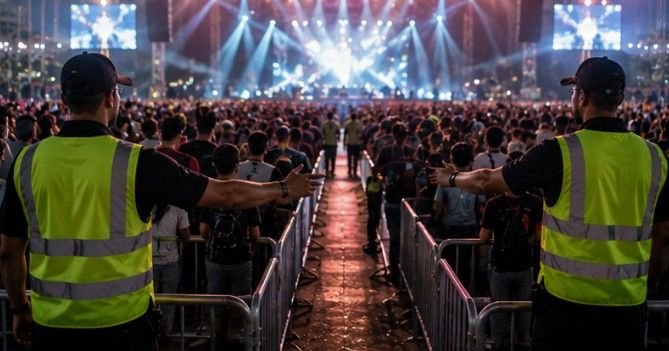
    Standing near the main gates at my first festival, watching thousands of eager fans surge forward at once, taught me a lesson about event safety that stuck forever. Learning how to manage crowds at events isn’t just about placing plastic barricades or hiring extra security guards. It requires an active strategy built around human psychology, real-time communication, and smart venue design to keep everyone safe and smiling.

    When people gather for concerts, sports games, or community expos, excitement runs high. High energy can quickly turn into confusion or danger if crowd density isn’t actively monitored. That is why building an adaptable safety culture before, during, and after your event makes all the difference.

    Key Takeaways: 

    • Map out ingress and egress routes weeks before doors open to prevent hazardous entry surges.
    • Cross-train ground staff in proactive de-escalation and real-time radio communication.
    • Deploy RFID ticketing and density sensors to spot emerging venue bottlenecks instantly.
    • Use serpentine barriers and high-contrast signage to maintain continuous queue movement.

    Knowing How to Manage Crowds at Events Matters

    Let’s face it, nobody attends a festival to get stuck in a human traffic jam. Learning how to manage crowds at events transforms potential chaotic stampedes into smooth, happy human rivers. When you master space design, your guests spend less time waiting in frustration and more time creating great memories.

    Good crowd control preserves your event reputation, reduces security risks, and keeps local fire marshals thrilled. It is the invisible superpower that guarantees everyone goes home safe and sound.

    Smart Planning and Venue Setup Before Doors Open

    Proactive venue mapping prevents dangerous bottlenecks long before the first attendee arrives at your gate. Knowing your venue’s maximum legal capacity and never exceeding it forms the absolute bedrock of guest protection.

    Mapping Ingress and Emergency Routes

    Every successful gathering relies on smooth entry, exit, and emergency pathways. Setting up dedicated, well-marked lanes for incoming and outgoing guests keeps people moving in predictable directions. Avoid designing dead ends or tight 90-degree turns, as these naturally trap movement and create unnecessary pressure points during peak hours.

    Setting Physical Barriers and Clear Signs

    Setting Physical Barriers and Clear Signs


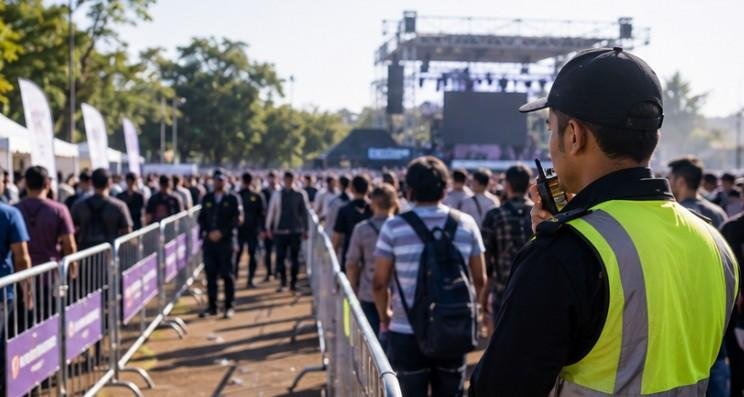
    Physical barriers like ropes or metal fences guide people in neat, orderly lines toward ticket scanners. Bright, high-contrast, easy-to-read signs showing where exits, food, and restrooms are located remove guesswork for wandering attendees. Placing water stations and concession stands along wide secondary corridors encourages attendees to disperse evenly across the entire venue footprint.

    Empowering Ground Teams and Operational Control

    Ground teams serve as your frontline eyes and ears during high-energy gatherings. Proper staffing ensures that every square foot of your venue remains monitored and supported throughout the operational lifecycle.

    Deploying Staff and Maintaining Clear Paths

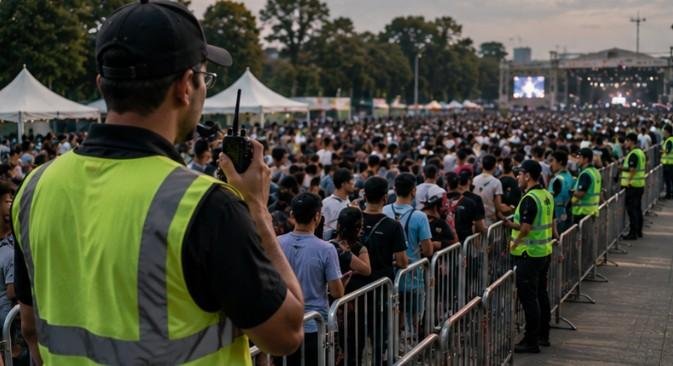
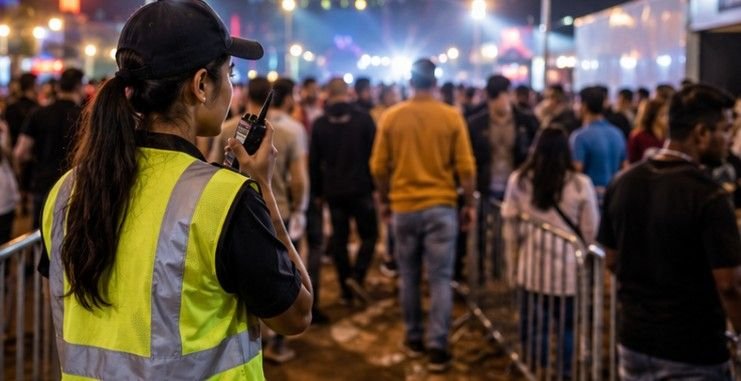
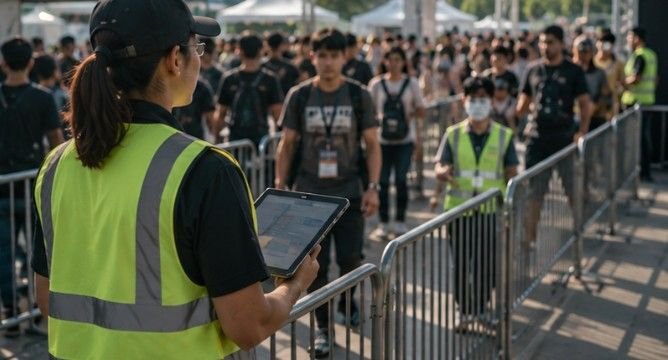
    Assign at least one trained crowd manager for every 250 attendees to keep vital pathways completely open. Security guards and helpers should be positioned along the sides of main paths so they do not accidentally block walking traffic. 

    Equipping your security personnel and volunteers with verbal de-escalation skills prevents minor arguments from turning into major disruptions.

    Fast Communication and Staggered Exits

    Clear communication keeps your safety operational plan running without hiccups. Use two-way radios or mobile tools so team members can talk quickly if a problem starts. When the event ends, release exiting crowds in stages or waves to stop massive bottlenecks at local transit hubs and parking structures.

    Essential Action Steps to Manage Crowds at Events

    Executing a seamless safety strategy relies on step-by-step tactical adjustments on game day. These practical adjustments transform complex venue layouts into organized, stress-free environments for attendees.

    Step One: Set Up Serpentine Queue Systems with Clear Signage

    Begin by organizing entry points with serpentine queue lines supported by highly visible directional signage. These winding queue layouts maximize available space, often accommodating nearly twice as many attendees compared to straight lines while maintaining a steady flow of movement. 

    Clear signs indicating entrances, ticket checkpoints, and security screening areas help eliminate confusion before guests even reach the venue. Well-designed queue systems reduce bottlenecks, minimize waiting frustrations, and create a more organized arrival experience, allowing attendees to enter safely and efficiently without unnecessary crowd buildup.

    Step Two: Deploy Trained Staff at Key Decision Points

    Position experienced event staff, volunteers, or security personnel at major intersections, entrances, exits, and high-traffic areas throughout the venue. Their primary responsibility is to provide clear directions, answer attendee questions, and guide people toward less crowded pathways whenever necessary. 

    Human interaction helps reduce hesitation and confusion, preventing groups from stopping suddenly in busy corridors. With visible assistance available, attendees feel more confident navigating the venue while overall pedestrian movement remains smooth, controlled, and predictable.

    Step Three: Stagger Entertainment and Activity Schedules

    Avoid scheduling multiple headline attractions or major performances at the exact same time. Instead, stagger performances, intermissions, and popular activities across different stages or venue zones. This strategic scheduling spreads attendees more evenly throughout the event and prevents sudden waves of people moving simultaneously between locations. 

    Reducing synchronized crowd movement significantly lowers congestion in corridors, food courts, and common gathering areas, making the venue safer and more comfortable for everyone.

    Step Four: Use Real-Time Communication Channels

    Keep attendees informed through live public address announcements, digital display boards, and mobile app push notifications, especially during peak arrival or departure periods. Instant communication allows organizers to redirect guests toward alternative entrances, exits, parking areas, or less crowded sections whenever congestion begins to form. 

    Timely updates also reassure attendees, reduce uncertainty, and encourage better crowd cooperation, helping maintain a calm, orderly atmosphere even during busy periods.

    Step Five: Review Performance After the Event

    Step Five: Review Performance After the Event

    Conduct a comprehensive post-event evaluation by reviewing incident reports, crowd movement data, staff feedback, and attendee observations. Identify successful crowd management strategies as well as areas requiring improvement, such as congestion hotspots or communication gaps. 

    Analyzing operational performance enables organizers to refine emergency procedures, improve staffing plans, and strengthen future safety protocols. Continuous evaluation ensures every event becomes more efficient, secure, and enjoyable than the last.

    Frequently Asked Questions

    1. How to control crowds in an event?

    How to control crowds in an event comes down to proactive planning, clear signage, physical serpentine barriers, well-trained security staff, real-time density monitoring, and continuous communication across all venue entry and exit points.

    2. What are the five C’s of event management?

    The five C’s are Concept, Coordination, Control, Culmination, and Closeout. In event safety, Control specifically focuses on crowd dynamics, risk management protocols, emergency readiness, and maintaining steady attendee flow throughout the venue footprint.

    3. What are common crowd management mistakes?

    Common crowd management mistakes include understaffing entry gates, ignoring bottleneck points near restrooms, failing to train staff in de-escalation, relying on single exit points, overfilling maximum venue capacity, and lacking rapid two-way communication tools.

    4. What are the three main methods of crowd control?

    The three main methods are physical controls like barricades and turnstiles, procedural controls such as timed entries and staff positioning, and psychological tactics including clear directional signage, calming lighting, and regular public announcements.

    Wrapping Up the Chaos: Your Safety Success Story

    Mastering how to manage crowds at events comes down to preparation, clear communication, and adaptable ground management. When you design smart layouts, empower your staff with proper training, and use modern tech tools, safety happens naturally. Prioritizing crowd flow keeps your attendees protected, relaxed, and fully focused on enjoying an unforgettable event experience from start to finish.

  • Build an Outdoor Event Weather Contingency Plan Fast!

    Build an Outdoor Event Weather Contingency Plan Fast!

    Organizing open-air gatherings brings undeniable energy, but unpredictable conditions can ruin the best setup without an outdoor event weather contingency plan. Keeping guests safe and assets protected requires proactive planning rather than last-minute guesswork. Seamless execution depends on building an airtight operational framework long before doors open.

    Key Takeaways

    • Establish precise meteorological triggers for lightning, high winds, and extreme temperatures.
    • Assign a single safety lead with absolute authority to pause or evacuate.
    • Activate multi-channel communication systems to keep staff and attendees updated quickly.
    • Secure backup indoor venues and structure vendor contracts with clear rain dates.
    • Conduct structured timeline checks at 72 hours, 24 hours, and event day.

    Establishing Preparation Steps and Decision Timelines

    Setting up clear operational checkpoints weeks in advance removes emotion from high-stakes decisions when bad weather approaches your venue.

    Reviewing Forecasts at 72 Hours Prior

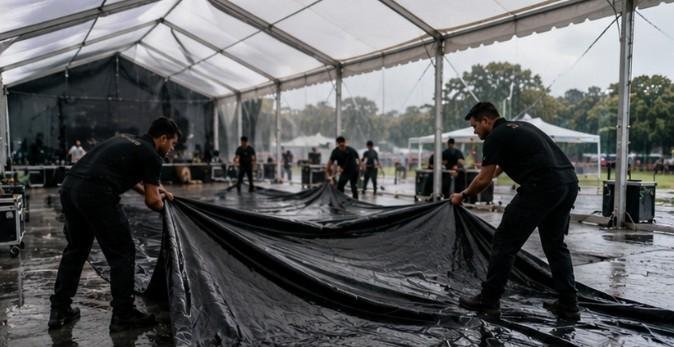
    The critical preparation phase begins three days out by tracking regional micro-meteorological trends and monitoring convective storm potential. Production teams must review precipitation probabilities, track incoming front speeds, and place secondary rentals like sidewalls, temporary flooring, and extra generators on standby.

    Establishing early contact with equipment suppliers ensures backup assets remain reserved without incurring full deployment fees prematurely.

    Assessing Risks at 24 Hours Prior

    Assessing Risks at 24 Hours Prior

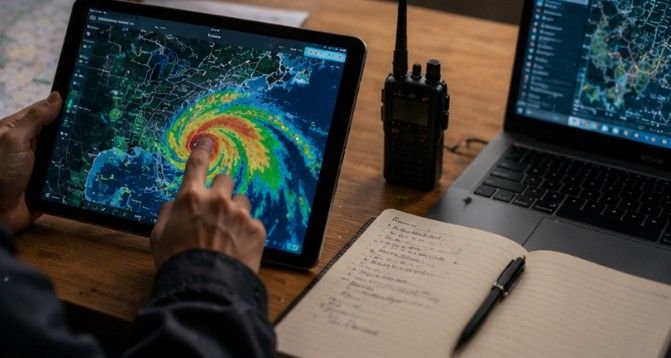
    When the clock hits the one-day mark, leadership must re-evaluate updated local radar models and local weather warnings. If severe weather probability crosses established risk thresholds, executive leads must make the formal call to alter site layouts, erect protective covers, or initiate postponement workflows.

    Making timely decisions prevents wasteful setup labor while giving vendors sufficient notice to protect sensitive gear.

    Designating a Single Decision Maker

    Operational chaos occurs when safety calls require full committee approvals during fast-moving atmospheric threats. Event organizers must assign one dedicated Safety Coordinator who holds exclusive, ultimate authority to halt, pause, or evacuate the gathering.

    This individual operates free from commercial distraction, focusing entirely on monitoring live radar, communicating with municipal responders, and evaluating venue safety.

    Setting Safety Triggers and Operational Actions

    Vague safety guidelines create confusion, making exact numerical thresholds vital for swift risk mitigation.

    Weather Hazard Action Trigger Primary Safety Protocol
    Lightning Strike within 6 to 8 miles Suspend operations immediately; direct guests to enclosed shelter
    High Winds Sustained winds over 20–25 mph Lower temporary staging, secure signage, and collapse inflatable structures
    Extreme Heat Heat Index above 100°F Activate misting stations, distribute free water, and staff medical tents
    Heavy Rain Persistent ground saturation Cover electrical connections, place turf matting, and divert site drainage

    Lightning Protection and the 30/30 Rule

    Lightning Protection and the 3030 Rule

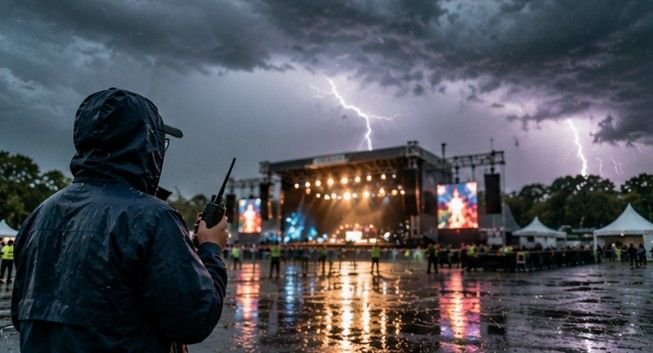
    Lightning presents an immediate, non-negotiable threat to outdoor crowds and temporary metal stage structures. Safety crews must enforce the standard 30/30 rule, suspending outdoor activities instantly when the time between a lightning flash and thunderclap hits 30 seconds or less.

    Operations must remain paused until 30 full minutes pass following the final audible thunderclap or detected strike.

    Managing High Winds and Structural Integrity

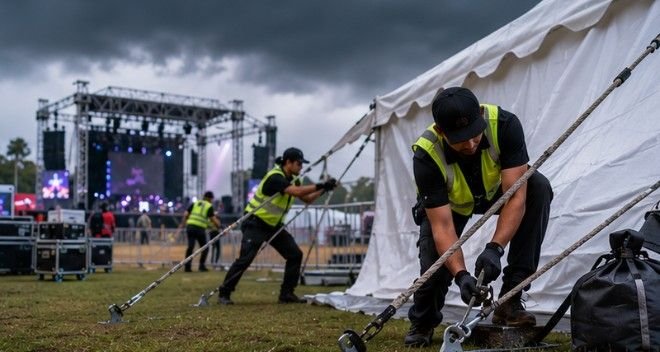
    Sudden wind gusts convert temporary tents, banners, and stage rigging into dangerous airborne hazards. Staff should monitor local anemometers continuously, securing lightweight items, lowering shade sails, and deflating arches when sustained winds reach 20 miles per hour.

    If sustained gusts cross 30 miles per hour, crews must clear temporary structures and execute structural teardown protocols.

    Extreme Heat Mitigation Protocols

    Rising heat indexes pose severe health risks that demand aggressive, proactive site intervention long before heat stroke occurs. When heat indexes exceed 95 degrees Fahrenheit, venue teams must open shaded cooling zones, distribute free potable water, and station medical personnel near high-density crowd areas.

    Providing continuous hydration keeps attendees safe and reduces emergency response calls.

    Essential Resources and Planning Guidelines

    Incorporating standardized industry frameworks ensures your safety documentation aligns with official municipal standards.

    Essential Resources and Planning Guidelines

    Event Ready Guide and Weather Services

    Leveraging resources like the National Weather Service Event Ready Guide helps organizers understand storm motion, cloud-to-ground lightning behavior, and convective updates. Partnering with local weather offices provides access to specialized spotter forecasts tailored specifically to your venue coordinates.

    Incorporating official meteorological data upgrades your risk assessment from simple guesswork to scientific precision.

    Severe Weather Frameworks and Site Parameters

    Consulting established inclement weather guidelines provides precise crowd-size sheltering metrics for temporary venues. Safety planners must calculate exact square footage requirements for enclosed emergency shelters based on total ticketed attendance.

    Verifying that nearby permanent structures, solid buildings, or fully enclosed vehicles can safely house your entire guest list prevents dangerous overcrowding during sudden evacuations.

    Action Plans and Site Checklists

    Utilizing standardized hazardous weather action plans allows production managers to assign clear tactical duties across all operational teams. Implementing a physical site checklist guarantees that crew members verify sandbag weight ratings, secure electrical GFCI connections, and clear drainage paths before gates open. Documenting these physical checks creates an auditable record of thorough safety compliance.

    Quick Implementation of Your Outdoor Event Weather Contingency

    Executing an outdoor event weather contingency plan effectively requires a systematic, chronological workflow during live operations.

    Quick Implementation of Your Outdoor Event Weather Contingency

    Begin by establishing your communication channels and testing all public address systems, SMS alert tools, and handheld radios during morning walk-throughs. Ensure all staff members know the exact terminology used for weather delays, site holds, and full evacuations to avoid mixed messaging over public channels.

    Next, monitor live weather radar continually throughout the operating hours, keeping direct contact lines open with site security and local emergency services. If weather parameters cross your pre-determined safety triggers, communicate instantly with stage managers to pause performances and broadcast clear instructions across site displays and audio systems.

    Finally, guide attendees calmly toward designated shelter zones using trained safety staff stationed along main exit corridors. Maintain active monitoring while crowds remain sheltered, providing regular public updates every fifteen minutes until atmospheric hazards pass completely and site engineers clear all physical structures for safe restart.

    Frequently Asked Questions

    1. Can you provide an example of a contingency plan for an event?

    A complete example includes designated safety coordinators, explicit weather triggers like lightning within six miles, pre-mapped indoor evacuation locations, multi-channel communication tools, and clear vendor rain-date policies designed to protect staff, attendees, and equipment.

    2. What is a weather contingency plan?

    It is a formal operational document detailing safety thresholds, emergency protocols, leadership hierarchy, and crowd management procedures required to protect an outdoor event from severe weather hazards like lightning, heavy rain, high winds, or extreme heat.

    3. What to do if it rains during your outdoor party?

    Immediately cover sensitive electrical gear, secure outdoor furniture, deploy pop-up canopies or sidewalls, direct guests toward covered shelters, and smoothly move activities indoors or onto non-slip covered flooring to maintain safety and comfort.

    4. What should you do if you are outside during a severe weather event?

    Immediately seek shelter inside a sturdy, fully enclosed permanent building or hard-topped vehicle. Avoid open spaces, tall isolated trees, temporary tents, metal structures, and standing water until emergency officials confirm the hazard has completely cleared.

    Weathering the Storm Like a Total Pro

    Developing an outdoor event weather contingency plan bridges the gap between unpredictable climate risks and smooth event operations. Setting explicit weather triggers, defining decision timelines, and maintaining clear communication channels protects guest safety while safeguarding your financial investments. Plan early, track weather conditions continuously, and lead your production team with absolute confidence whenever the skies darken.

  • Best Carnival Attractions for Community Events That Bring Every Generation Together

    Best Carnival Attractions for Community Events That Bring Every Generation Together

    I’ve been to community festivals where the rides looked impressive, but the event still felt disconnected because everyone ended up doing their own thing. Kids rushed to one area, adults gathered somewhere else, and grandparents mostly watched from the sidelines. Those experiences made me realize that the attractions themselves aren’t what make an event memorable. It’s how they bring people together.

    I also started noticing that the busiest attractions were rarely the newest or most expensive. Instead, they were the ones where multiple generations could laugh, cheer, compete, or simply enjoy the moment together. When families leave with shared memories instead of separate experiences, a community event feels successful long after the tents come down.

    What Makes a Carnival Attraction Great for Community Events?

    What Makes a Carnival Attraction Great for Community Events

    The best carnival attractions for community events do more than entertain. They encourage interaction, create lasting memories, and give every guest a reason to participate regardless of age.

    A successful event should have a healthy mix of classic rides, interactive games, and gathering spaces. Instead of focusing only on thrill rides, organizers should think about how attractions influence guest movement, waiting areas, and opportunities for families to enjoy activities together.

    Modern event planning also considers accessibility. Attractions that accommodate young children, seniors, and guests with mobility challenges make the entire festival more welcoming. When everyone feels included, visitors tend to stay longer, spend more with vendors, and are more likely to return the following year.

    Classic Attractions That Never Lose Their Appeal

    Some attractions have remained popular for decades because they appeal to nearly everyone.

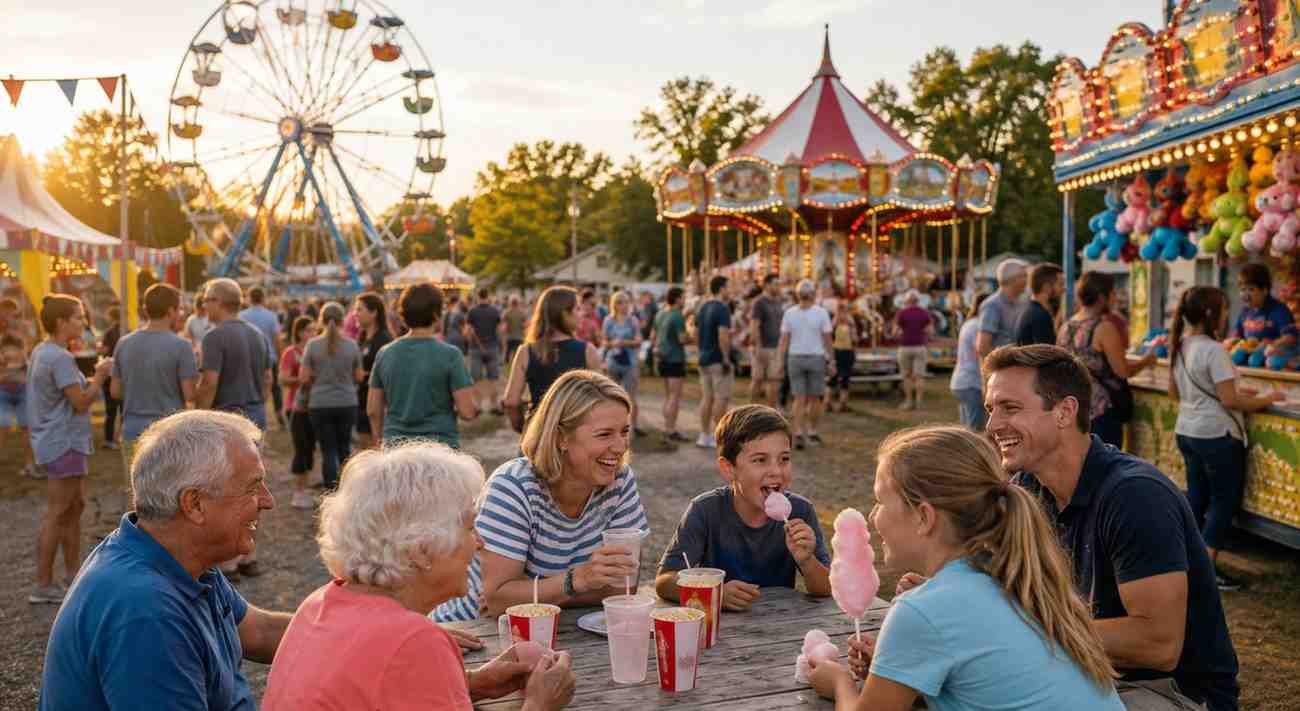
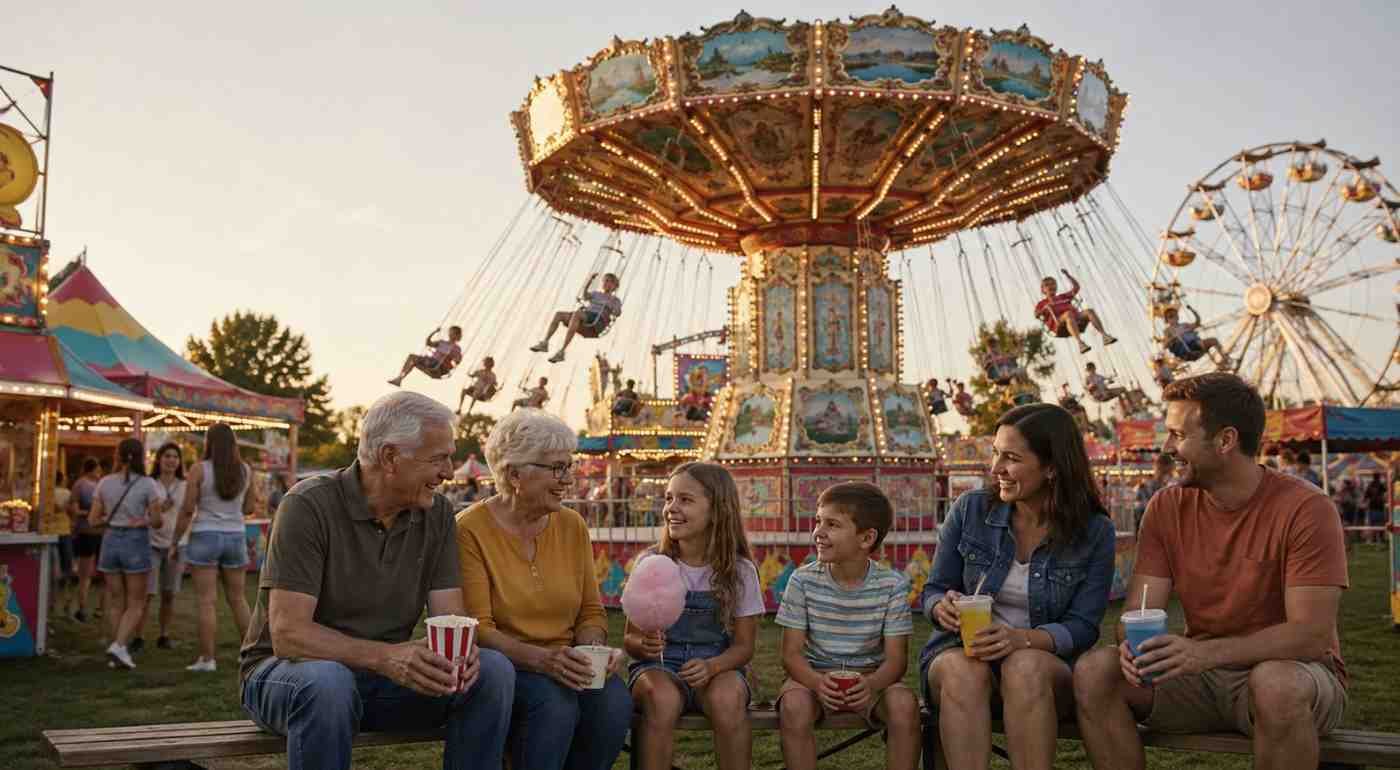
    The Giant Ferris Wheel continues to be one of the most recognizable carnival landmarks. Besides offering scenic views across the festival grounds, it gives grandparents, parents, and young children the chance to enjoy a ride together at a comfortable pace. It also naturally becomes a gathering point that helps guests navigate large event spaces.

    A traditional Carousel delivers the same timeless appeal. With beautifully decorated horses, stationary bench seating, and gentle movement, it welcomes both adventurous children and visitors who prefer a slower experience.

    The Giant Slide adds just enough excitement without becoming intimidating. Families often enjoy racing down neighboring lanes together, turning a simple attraction into friendly competition that keeps people smiling.

    Trackless trains provide another excellent option. While children love riding around the event, older guests appreciate the opportunity to rest while still experiencing the festival. They also help connect different areas of large community events without feeling like transportation alone.

    Interactive Games Bring People Together

    Interactive Games Bring People Together

    While rides attract attention, games often create the strongest conversations.

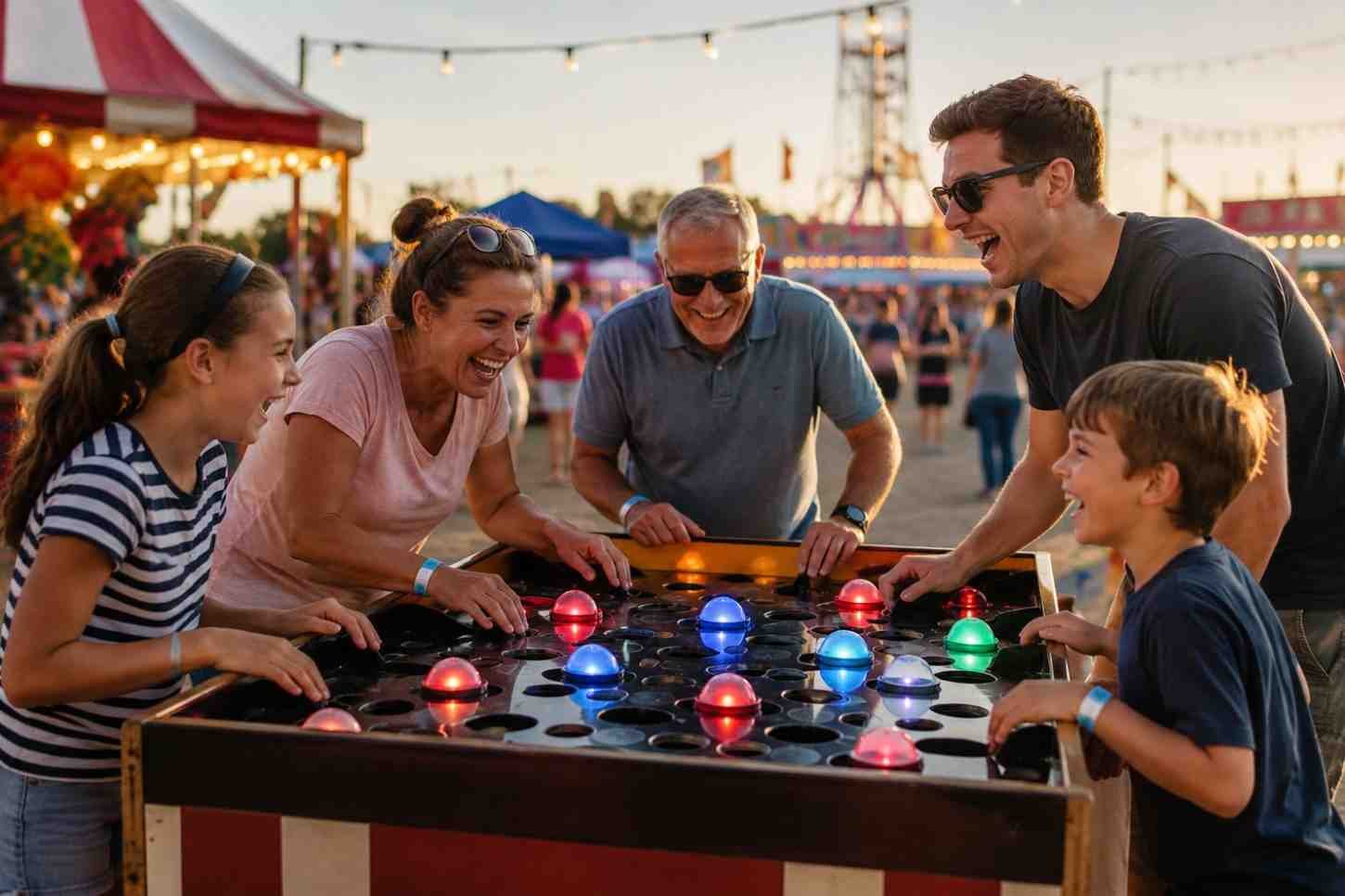
    The Cake Walk remains a favorite because anyone can participate. Combining music, anticipation, and simple rules, it creates excitement without requiring athletic ability. Children, parents, and grandparents all have an equal chance of winning a sweet prize.

    Milk Bottle Knockdown offers another example of inclusive entertainment. Younger players can move closer to the target, while older participants challenge themselves from greater distances. Everyone enjoys the same game without feeling excluded.

    Water gun races are another crowd favorite because success depends more on steady aim than physical strength. It’s always entertaining to watch children compete fairly against adults while the cheering crowd encourages every participant.

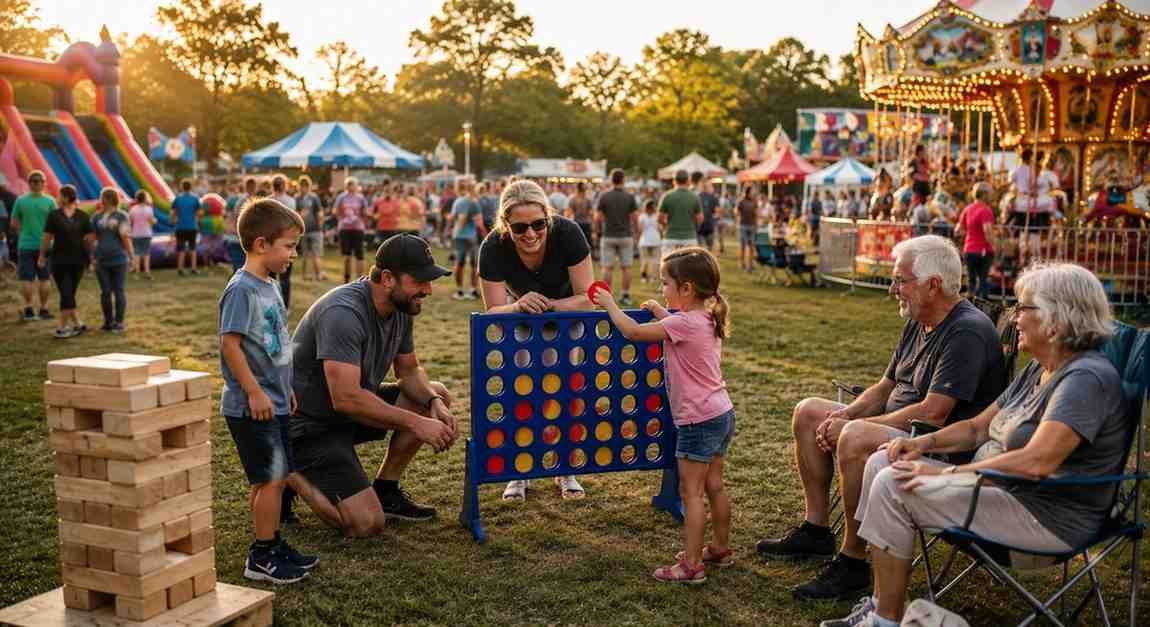
    Large lawn games such as Giant Connect Four and Giant Jenga create a relaxed atmosphere where families naturally gather. These games don’t require long lines or complicated instructions, making them perfect between rides or while waiting for performances to begin.

    Attractions That Become Community Gathering Spaces

    Some of the most valuable attractions aren’t just activities. They’re places where the community comes together.

    The High Striker consistently attracts spectators as much as participants. Watching people of every age test their strength creates laughter, encouragement, and plenty of memorable moments. Many versions now include different mallet sizes, making the challenge enjoyable for younger children as well.

    The Dunk Tank brings a different kind of excitement. Inviting school principals, local coaches, firefighters, or community leaders into the tank instantly creates a shared experience that encourages participation while supporting fundraising efforts.

    Live music and cultural performances add another important layer. Comfortable seating, shaded viewing areas, and open space near the stage allow every generation to enjoy performances in their own way. While children dance near the front, older attendees can comfortably watch from nearby seating without feeling disconnected.

    Blending Tradition With Modern Expectations

    Blending Tradition With Modern Expectations

    Today’s guests appreciate classic carnival fun, but they also enjoy attractions that create memorable moments worth sharing.

    Interactive installations, colorful lighting, oversized games, and visually striking rides naturally encourage photos throughout the day. These experiences often generate excitement before, during, and after the event as families share their favorite moments online.

    That is why many organizers now combine timeless rides with social media friendly attractions that encourage organic sharing without taking away from the traditional carnival atmosphere. The goal isn’t simply creating photo opportunities. It’s designing experiences people genuinely want to remember and talk about.

    Choosing Attractions That Fit Your Community

    Every community event has different priorities, so attraction selection should reflect the audience rather than following the latest trend.

    Before booking entertainment, consider:

    • The age range of expected guests.
    • Available event space and layout.
    • Accessibility for families and seniors.
    • Budget for attractions and staffing.
    • Opportunities for community participation.

    A balanced lineup often performs better than filling every available space with high-energy rides. Mixing relaxing attractions, interactive games, family rides, and live entertainment creates natural movement throughout the festival while preventing overcrowding in one area.

    The most successful community events aren’t built around individual attractions. They’re built around shared experiences that encourage people to spend more time together.

    FAQs: Best Carnival Attractions for Community Events That Bring Every Generation Together

    1. What are the best carnival attractions for community events?

    Popular choices include Ferris wheels, carousels, giant slides, trackless trains, midway games, dunk tanks, and live entertainment because they appeal to a wide range of ages.

    2. How do I choose attractions for a community festival?

    Start by considering your audience, available space, budget, accessibility needs, and the type of experience you want families to have throughout the event.

    3. Why are interactive games important at carnival events?

    Games encourage participation, conversation, and friendly competition while allowing guests of different ages to enjoy activities together without requiring special skills.

    4. Should community events include both classic and modern attractions?

    Yes. Combining traditional carnival favorites with newer interactive experiences keeps longtime attendees engaged while attracting younger audiences looking for memorable experiences.

    Why Shared Experiences Leave the Biggest Impression

    The attractions people remember most aren’t always the fastest rides or the biggest inflatables. They’re the moments when families laugh together on a Giant Slide, cheer for a successful High Striker attempt, or gather around a stage to enjoy local performers. Those shared experiences strengthen community connections and give visitors a reason to return year after year.

    When every generation can participate, the event becomes more than a carnival. It becomes a tradition.

  • Event Evacuation Plan Best Practices for Venue Safety

    Event Evacuation Plan Best Practices for Venue Safety

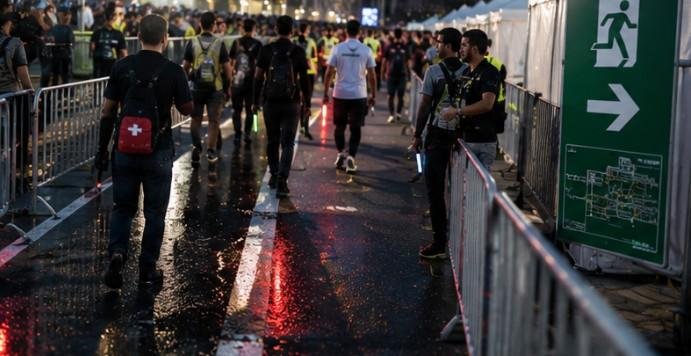
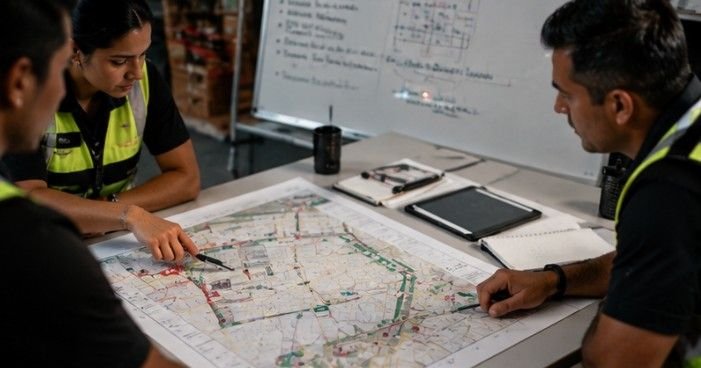
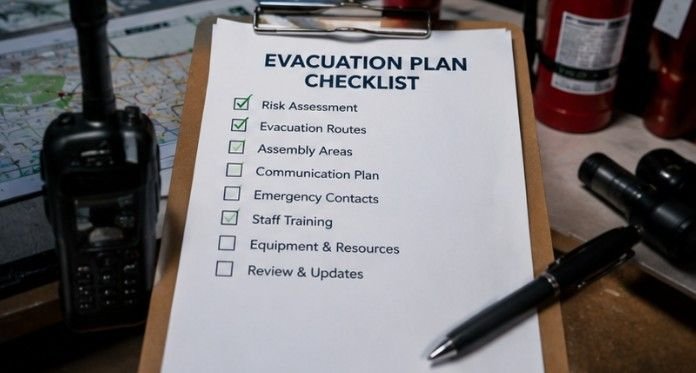
    Running live gatherings requires split second decisions whenever unexpected weather or facility threats arise. Our safety crew learned early that mastering event evacuation plan best practices transforms potential panic into an orderly exit. An effective event evacuation plan requires clear communication, mapped routes, and assigned leaders. Essential practices include defining primary and secondary exits, training staff on crowd control, and assisting vulnerable attendees.

    Every host wants guests to enjoy themselves and head home safely afterward. Building a robust emergency response framework gives your event team total confidence. Protecting thousands of lives relies on thorough preparation long before opening venue doors.

    Key Takeaways

    Smart emergency preparation ensures every guest reaches safety without delay.

    • Map primary and secondary exit routes to prevent crowding.
    • Station trained safety leaders at every main hall sector.
    • Establish exterior assembly points far from facility hazards.
    • Implement loud, multi-channel alerts during emergency situations.
    • Designate dedicated assistance teams for mobility restricted attendees.

    Mastering an Event Evacuation Plan 

    Think of emergency safety as the ultimate backstage security pass. Following event evacuation plan best practices prevents chaotic stampedes when severe weather strikes or power grids drop. Prepared hosts handle surprises smoothly, keeping guests safe while avoiding massive liability lawsuits later.

    Proper preparation turns high pressure moments into simple, calm routines. When attendees feel completely protected by visible safety leaders, your reputation as a professional organizer soars.

    Planning and Preparation Procedures

    Proactive layout design forms the bedrock of every successful safety response.

    Setting Up Exterior Assembly Areas

    Gathering points must accommodate massive crowds safely outside venue perimeters. Establish primary and secondary assembly areas well outside the venue footprint. Locating these spaces away from responding emergency vehicles keeps roadways clear. Check out federal frameworks outlined by FEMA to ensure your outdoor staging points meet modern safety standards.

    Maintaining Unobstructed Corridors

    Clear pathways allow rapid movement during sudden facility clearing operations.

    Keep all pathways, exits, and stairwells free of physical blocks like trash bins, extra staging equipment, or sponsor booths. Inspect these corridors regularly throughout your gathering. You can review general guidelines for events from resources to benchmark your facility clearance checklists.

    Installing High Visibility Signage

    Bright directional markers lead panicking attendees toward safe exits effortlessly.

    Mark routes clearly with visible signs and emergency lights that stay illuminated during power blackouts. Position directional arrows overhead so tall crowds can read them easily from across the room. Clear visual cues remove guesswork when people need to move fast.

    Execution and Crowd Management Strategies

    Directing live human traffic demands rapid communication and firm guidance.

    Execution and Crowd Management Strategies

    Deploying Multi-Sensory Alert Systems

    Reaching thousands of guests at once requires both sight and sound triggers. Use visual and loud audio alerts to tell people an emergency is happening without delay. Strobe lights grab immediate attention while house lights turn up to full brightness. Combining bright visuals with loud alarms ensures no one misses the exit call.

    Broadcasting Clear Verbal Directives

    Simple instructions prevent confusion across crowded exhibition floors.

    Give short and clear instructions over speakers or through staff holding megaphones. Avoid complex technical jargon that might confuse stressed attendees. Repeating plain directions continuously helps crowds process instructions and react promptly.

    Utilizing Physical Traffic Control Barriers

    Guiding human movement prevents sudden crushes at bottleneck locations.

    Use physical barriers like bars and ropes to guide large crowds smoothly toward exterior doors. Stanchions organize dense lines into steady streams instead of chaotic pushes. Refer to standard elements via the Occupational Safety and Health Administration to set proper barrier distances.

    Leading Groups With Trained Staff

    On-ground leaders provide the human touch needed during fast evacuations.

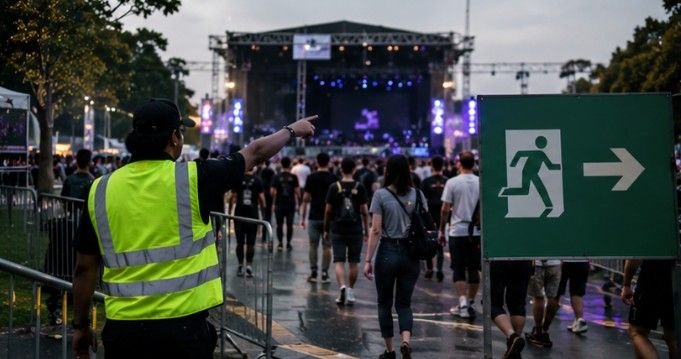
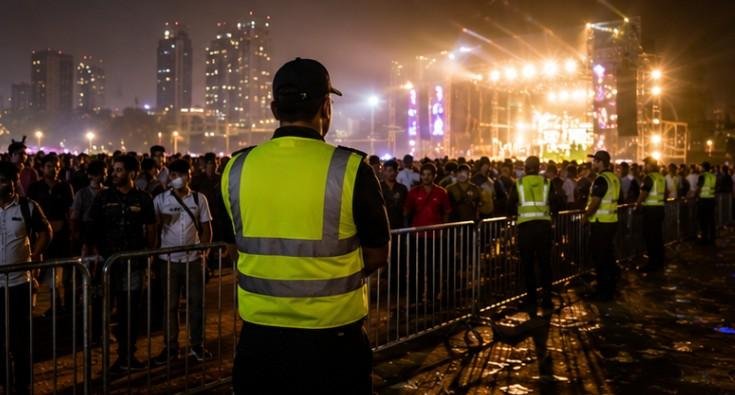
    Assign trained staff to lead groups toward the closest safe exit using illuminated traffic wands. Marshals wearing high visibility vests anchor crowd movement and maintain order. Their calm demeanor prevents panic from spreading among anxious attendees.

    Safety Protocols and Special Needs Accommodation

    Inclusive emergency planning guarantees every guest receives equal protection.

    Safety Protocols and Special Needs Accommodation

    Assisting Attendees With Disabilities

    Mobility limitations require pre-planned support systems and dedicated routes.

    Plan special help and designated exit paths for people with disabilities or temporary injuries. Pair individuals needing help with dedicated safety marshals before doors open. Check out advice from Evacuscape on crowd safety to select proper evacuation chairs for stairwells.

    Reviewing Standard Evacuation Guidelines

    Consistently updating your safety steps guarantees compliance with national standards.

    Read general steps for leaving an area safely on Ready.gov to align your protocols with federal recommendations. Look at the template and guide by South Dakota State University to structure written protocols for your team. You should also check the alternate OSHA info link at OSHA eTool to verify workplace safety requirements.

    How to Execute Your Event Evacuation Plan Best Practices 

    How to Execute Your Event Evacuation Plan Best Practices

    Putting your event evacuation plan best practices into motion requires a clear sequence of actions. Follow these step-by-step methods during a live facility emergency.

    First, the lead Incident Commander confirms the safety threat and issues the official evacuation order. Audio visual crews immediately cut main performance sound and raise house lighting to maximum levels.

    Next, safety marshals take position along key egress corridors using megaphones and light wands. Staff guide attendees smoothly toward primary and secondary exits while keeping walkways clear of fallen items.

    Finally, sector leaders conduct thorough sweeps of restrooms, green rooms, and back-of-house areas. All personnel assemble at designated exterior zones to complete headcounts before local fire authorities arrive.

    Frequently Asked Questions

    1. What are the core components of event evacuation plan best practices?

    The core elements include mapping clear primary and secondary routes, training safety marshals, establishing exterior assembly points, and maintaining accessible exit paths for all attendees throughout your gathering.

    2. How far away should assembly points be from the venue?

    Assembly points should sit at least 500 feet away from the main building structure to protect guests from falling debris and allow incoming emergency vehicles unhindered access to the venue.

    3. Who has the authority to order a full event evacuation?

    The designated Incident Commander holds sole legal authority after evaluating real-time threats alongside venue managers, private security heads, and local municipal fire department wardens.

    4. How do staff handle attendees with mobility impairments during an exit?

    Designated marshals assist guests with disabilities using special ramped pathways or evacuation stair chairs, guiding them to pre-assigned areas of refuge before exiting the building.

    Execute That Safety Plan With Total Confidence!

    Mastering event evacuation plan best practices guarantees that your production team handles unexpected venue emergencies with absolute confidence and ease. By mapping exit corridors, training on-ground staff, maintaining accessible pathways, and deploying clear alerts, you protect every life under your roof. Prioritize these essential safety protocols today so your future gatherings remain safe, seamless, and incredibly successful!

  • Crowd Management Plan for Events: Keep Guests Moving Safely

    Crowd Management Plan for Events: Keep Guests Moving Safely

    A lively event may look effortless, yet smooth entrances, clear aisles, and calm announcements come from preparation. I have seen one small bottleneck change the mood fast. A crowd management plan for events gives teams a shared playbook before excitement turns into confusion.

    Key Takeaways

    • Know legal capacity. 
    • Map crowd routes. 
    • Train staff early. 
    • Set action triggers. 
    • Review incidents after guests leave.

    Pre-Event Planning

    Strong event safety begins before opening, with accurate numbers, a realistic site plan, and people who understand their responsibilities.

    Confirm Venue Capacity

    Start with the legal occupancy set by the venue or local authority. Count everyone required, then choose a reliable attendance method. Ticket scans, clickers, wristbands, and controlled re-entry can prevent accidental overcrowding.

    Cornell University’s event crowd management guidance uses the ACE approach: keep aisles clear, know capacity, and keep exits unobstructed. Cornell also requires one crowd manager per 250 attendees for its events. Treat that figure as local guidance, not a universal national rule, because legal requirements vary.

    Map The Full Layout

    Draw a site map showing entrances, screening lanes, seating, stages, restrooms, first aid, accessible routes, exits, vehicle lanes, and assembly areas. Mark narrow corridors, stairs, blind spots, and places where crowd streams may cross.

    Walk the route at event time. Check lighting, surfaces, weather, and visibility. Ask where queues could grow, where mobility may be restricted, and how emergency responders would reach a patient during peak attendance.

    Assign Trained Staff

    Place identifiable staff at entrances, queues, stage fronts, accessible areas, and exits. Give each person a supervisor, exact post, radio channel, emergency contact method, and authority level.

    Staffing should reflect attendance, crowd behavior, alcohol service, venue complexity, weather, and local rules. The City of Oxnard requires trained crowd managers for events expecting more than 500 people at one per 250 attendees, showing why organizers must check their own permitting requirements.

    How To Build A Crowd Management Plan For Events

    The best plan follows the guest journey from arrival to departure, then adds simple responses for anything that interrupts that journey.

    How To Build A Crowd Management Plan For Events

    Profile The Crowd

    Estimate attendance by hour. Record arrival peaks, age groups, mobility needs, language needs, alcohol service, family attendance, and venue familiarity. A conference crowd behaves differently from a standing concert audience.

    Consider predictable movement around performances, session changes, giveaways, food service, weather shifts, and closing time. This profile helps planners choose staffing posts, barrier layouts, announcements, and monitoring methods.

    Set Action Triggers

    Write down warning signs that require action. Useful triggers include a queue exceeding its holding area, a blocked aisle, slow entrance throughput, a zone reaching capacity, repeated medical calls, severe-weather alerts, or radio failure.

    Connect each trigger to a response and decision-maker. Actions may include opening another lane, redirecting guests, pausing admission, sending a roaming team, or contacting emergency services. Avoid one universal density number because movement, terrain, barriers, and crowd mood change risk.

    Test The Plan

    Run a staff briefing, site walk, and radio check before opening. For complex events, hold a tabletop exercise covering overcrowding, a missing child, power loss, severe weather, a medical emergency, and evacuation.

    Ensure temporary workers understand location names, escalation steps, and backup communication methods. Record training attendance and correct gaps before guests arrive.

    During The Event

    Real-time crowd management keeps the plan active by watching conditions, protecting routes, and sharing information early.

    Keep People Flowing

    Keep aisles, corridors, stairs, gates, and exits free from equipment, standing guests, merchandise, and uncontrolled queues. Position staff where guests make decisions, not only where problems form.

    Use barriers to guide movement without creating traps or tight turns. Separate arriving and departing guests where possible. Adjust food, restroom, merchandise, and attraction lines before they overlap. Cornell states that exits, corridors, stairs, and egress routes must remain clear.

    Monitor Conditions

    Monitor Conditions

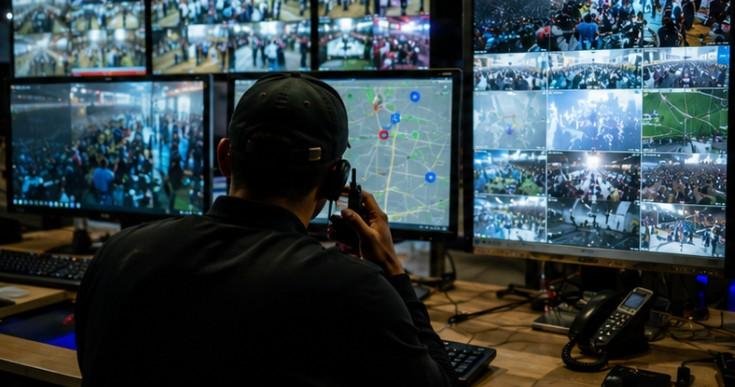
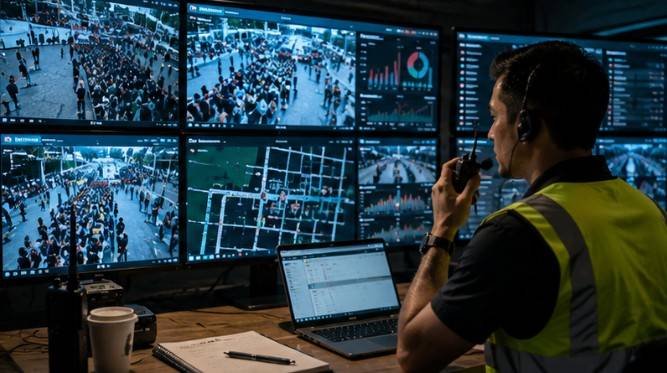
    Supervisors should combine observation with ticket scans, counts, CCTV, radio reports, weather and queue checks. Technology supports judgment, but trained people must interpret behavior and act.

    Watch for sudden stops, opposing crowd streams, barrier climbing, pushing, distress, blocked sightlines, or frustration. Record important interventions so supervisors understand changing conditions.

    Make Clear Announcements

    Tell attendees where exits, medical help, accessible services, water, transportation, and guest support are located. Give safety information before activities begin and repeat updates as conditions change.

    Prepare short messages for evacuation, sheltering, delays, lost people, disruption, and cancellation. Use speakers, screens, alerts, staff instructions, and signs. Communication should be calm, specific, and accessible.

    Emergency Protocols

    Emergency planning matches each hazard with the right response instead of treating every incident as evacuation. Look out for temporary structure safety for events.

    Emergency Protocols

    Protect Medical Access

    Place first aid in a visible location outside the densest zone. Keep emergency vehicle lanes, responder entrances, and routes to patients open.

    Give staff a way to report location, patient condition, hazards, and access routes. Share the site map and command contacts with medical providers, security, venue leaders, and local emergency services.

    Prepare Safe Evacuation

    Identify primary and alternate exits, assembly areas, accessible evacuation routes, and staff responsible for checking spaces. Doors and gates must be usable without confusing procedures or unavailable keys.

    Some threats require shelter-in-place or lockdown instead. Document who can order each action and how guests will receive instructions. The University of Mary Washington’s crowd management guidance offers a useful model for assigning exit, occupancy, communication, inspection, and coordination duties.

    Review Every Incident

    After the event, collect attendance data, queue times, radio logs, medical reports, security notes, complaints, and staff feedback. Discuss near misses, not only emergencies.

    Update maps, triggers, staffing, and procedures while details are fresh. Assign each improvement to an owner and deadline. This review turns experience into stronger event safety.

    Frequently Asked Questions

    1. What Should A Crowd Management Plan For Events Include?

    It should cover legal capacity, crowd profiles, venue maps, staffing, entry and exit procedures, communication, accessibility, emergencies, transport, monitoring triggers, training, and post-event review.

    2. Is One Crowd Manager Needed For Every 250 Guests?

    Some US institutions and local authorities use that ratio, but it is not universal. Confirm fire codes, permit terms, venue policies, and risk-based staffing needs locally.

    3. How Can Organizers Prevent Event Bottlenecks?

    Estimate traffic by time, map crossing routes, separate queues, monitor entrance speed, protect aisles, station staff at decision points, and redirect guests before congestion becomes unsafe.

    4. Do Small Events Need A Written Crowd Plan?

    Yes, when limited exits, alcohol, temporary structures, vulnerable guests, unusual activities, public access, or permit conditions create risks requiring coordinated staff action.

    Keep The Cheers, Lose The Chaos

    A memorable gathering should leave guests talking about the experience, not the exit line. A practical crowd management plan for events connects legal capacity, thoughtful venue flow, trained staff, accessible communication, emergency readiness, and post-event review. Build it around people and measurable triggers, then practice before opening. That preparation keeps guests comfortable, teams confident, events moving safely.

  • The Rise of Social Media-Friendly Attractions at Modern Events

    The Rise of Social Media-Friendly Attractions at Modern Events

    I started noticing a change at events a few years ago. People still enjoyed live entertainment, but they weren’t just watching anymore. They were searching for the perfect angle, recording short videos, and gathering around installations that looked like they belonged on social media. The attractions drawing the biggest crowds weren’t always the loudest or the most expensive. They were the ones people genuinely wanted to share.

    I also realized that the best events didn’t feel like photo shoots. They encouraged people to participate, laugh, and interact first. The photos and videos happened naturally because guests were having a memorable experience, not because someone told them to post online.

    Why Social Media Changed Event Expectations

    Why Social Media Changed Event Expectations

    Modern events are no longer judged only by attendance or entertainment. Guests now expect experiences they can actively participate in, capture, and share with friends. A creative attraction has the potential to extend an event’s reach long after the last guest leaves.

    Every shared photo, video, or story becomes a personal recommendation. Instead of relying entirely on advertising, organizers benefit from user-generated content that reaches hundreds or even thousands of people through attendees’ own networks.

    This shift has also created a stronger sense of anticipation. Seeing friends enjoy an event online often sparks curiosity and encourages others to attend the next one. That fear of missing out has become one of the biggest drivers behind ticket sales and repeat attendance.

    What Makes an Attraction Worth Sharing?

    Not every colorful display becomes popular online. People share experiences that feel unique, interactive, and personal.

    Interaction Creates Better Memories

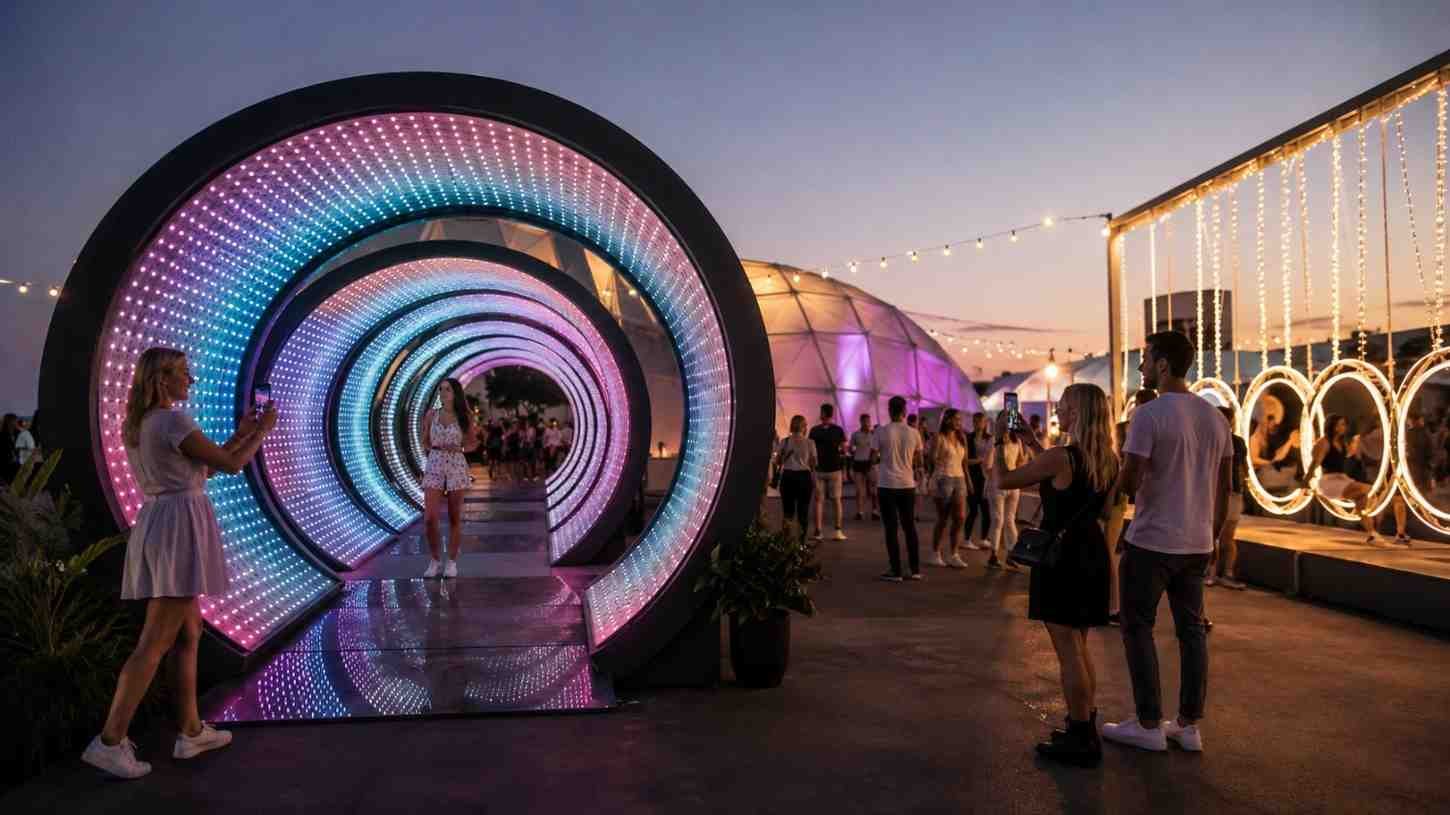
    Guests enjoy attractions that invite them to become part of the experience instead of simply observing it. A mechanical bull, mirror maze, LED tunnel, interactive game, or projection wall encourages movement, laughter, and genuine reactions. Those authentic moments often create better content than a staged backdrop.

    The most successful attractions combine entertainment with participation. When people feel involved, they naturally reach for their phones because they want to remember the moment, not because they’re being encouraged to post.

    Personalization Matters

    Personalization Matters

    Custom experiences make people feel connected to an event.

    Whether it’s a digital display showing a guest’s name, a personalized souvenir, or a branded backdrop designed around a specific celebration, small personal touches create stronger emotional connections.

    Instead of designing attractions only for photos, successful organizers focus on creating moments that guests genuinely enjoy. The social sharing becomes a natural outcome rather than the primary objective.

    Attractions That Keep Guests Coming Back

    Today’s event planners have countless opportunities to create memorable experiences.

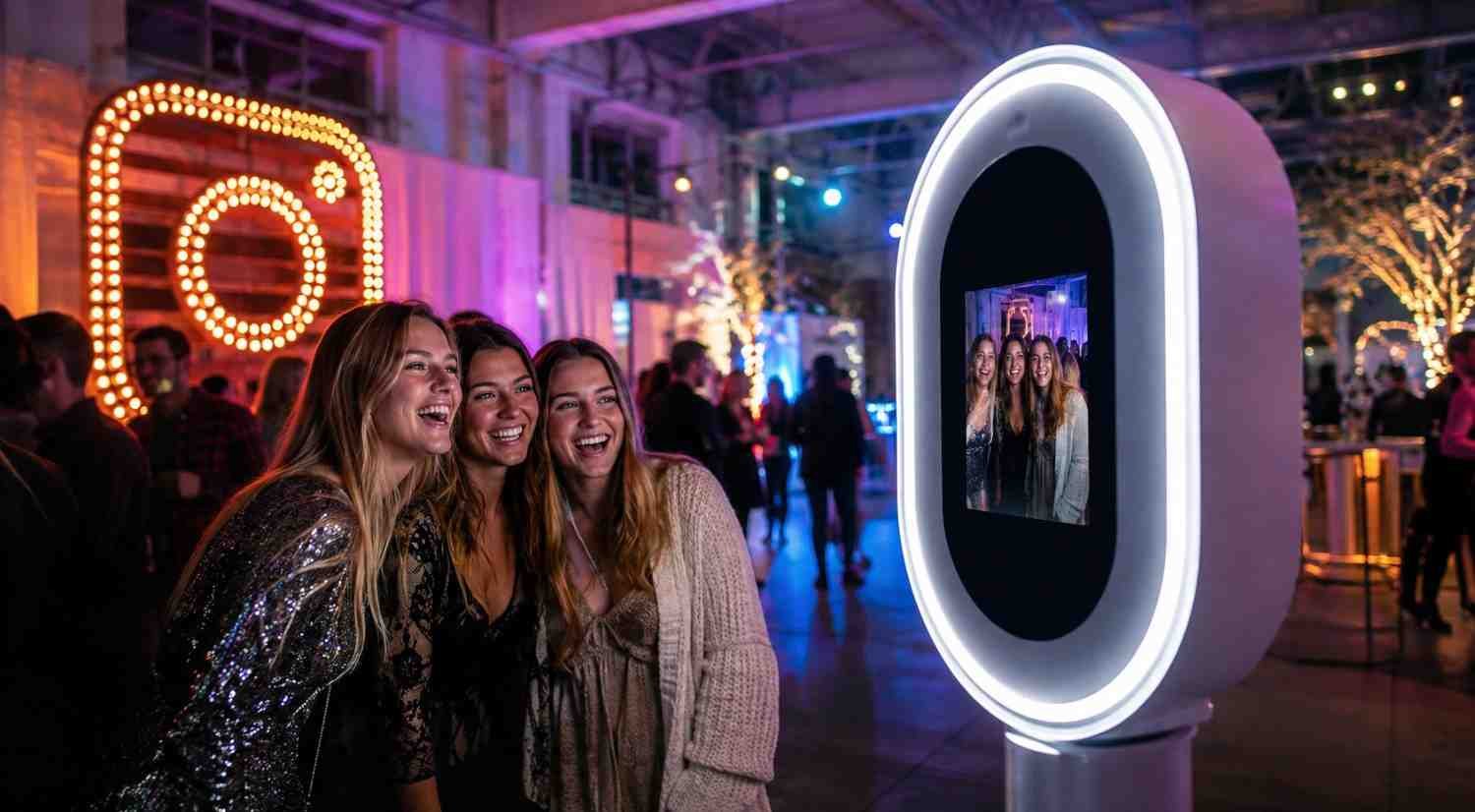
    Immersive photo booths continue to evolve far beyond traditional backdrops. Guests now enjoy 360-degree video booths, overhead camera systems, slow-motion recording stations, and neon infinity rooms that create dramatic visual effects without requiring professional photography.

    Interactive art installations have also become popular. Projection mapping, responsive lighting, digital murals, and sculptures that react to movement encourage visitors to engage instead of simply walking past.

    Food has become part of the attraction as well. Color-changing beverages, liquid nitrogen desserts, oversized carnival treats, and creative presentation styles often generate as much attention as the entertainment itself.

    Statement walls remain another favorite. Bold typography, floral displays, custom neon signs, and seasonal installations provide attractive backgrounds while reinforcing the event’s identity.

    Many organizers are also investing in immersive carnival experiences because they combine entertainment, storytelling, technology, and guest participation in ways that naturally encourage photos, videos, and conversations.

    Designing Attractions That Encourage Organic Sharing

    Designing Attractions That Encourage Organic Sharing

    Creating a shareable attraction requires thoughtful planning rather than simply adding decorative elements.

    Lighting plays one of the biggest roles. Soft lighting, colorful LED features, and carefully positioned fixtures help smartphone cameras capture cleaner images while minimizing harsh shadows.

    Placement is equally important. Popular attractions should have enough surrounding space to prevent long lines from disrupting traffic flow. Dedicated viewing areas also allow guests to enjoy the experience without feeling rushed.

    Event hashtags work best when they’re integrated naturally into signs, installations, or decorative elements instead of appearing like advertisements. Guests are much more likely to use them when they become part of the attraction itself.

    Accessibility also matters. Attractions that are easy to find, simple to participate in, and welcoming for different age groups usually generate higher engagement throughout the event.

    Common Mistakes That Reduce Engagement

    Many organizers focus so heavily on creating something visually impressive that they forget about the guest experience.

    Overcrowded installations quickly lose their appeal. Long wait times often discourage participation, especially when visitors have limited time to explore the event.

    Another mistake is relying on trends without considering the audience. An attraction that performs well at a music festival may not create the same excitement at a corporate gathering or community celebration.

    Technology can also become a distraction when it feels complicated. Guests appreciate experiences that are intuitive, enjoyable, and require very little explanation.

    Finally, chasing viral content should never replace authentic entertainment. The attractions people remember most are usually the ones that made them laugh, compete, or share meaningful moments with family and friends.

    Looking Beyond Likes and Shares

    Looking Beyond Likes and Shares

    Social media metrics are valuable, but they shouldn’t become the only measure of success.

    A memorable attraction strengthens conversations between guests, encourages repeat attendance, and builds a positive reputation that extends beyond online engagement.

    The most successful events understand that people don’t simply want another photo for their profile. They want experiences worth remembering. When attractions create genuine excitement, the social media content follows naturally.

    Designing events around participation instead of promotion creates stronger emotional connections while helping organizers build lasting relationships with their audience.

    FAQs: The Rise of Social Media-Friendly Attractions at Modern Events

    1. What are social media-friendly attractions?

    They are interactive experiences designed to encourage guests to naturally take photos, record videos, and share memorable moments during an event.

    2. Why are these attractions becoming more popular?

    People increasingly value experiences they can participate in rather than simply watch, making interactive attractions more engaging and shareable.

    3. Do social media-friendly attractions benefit event organizers?

    Yes. They increase audience engagement, encourage user-generated content, improve event visibility, and often contribute to stronger word-of-mouth marketing.

    4. Which attractions usually generate the most online engagement?

    Interactive photo booths, digital art installations, immersive environments, creative food displays, and hands-on carnival attractions consistently encourage guests to create and share content.

    Why Great Attractions Leave an Impression Before They Go Viral

    The best attractions don’t succeed because they’re designed for social media. They succeed because they create genuine reactions that people naturally want to capture and share. As guest expectations continue to evolve, successful event organizers will focus less on building photo opportunities and more on creating memorable experiences that encourage participation, conversation, and authentic engagement.

    When people leave talking about an experience instead of simply posting about it, that’s when an attraction has truly achieved its purpose.

  • First Aid Requirements for Events: Your Safety Blueprint

    First Aid Requirements for Events: Your Safety Blueprint

    Planning a major festival or corporate gathering keeps our entire team on edge until every single guest heads home safe and happy. Meeting all the necessary first aid requirements for events is the single most critical step in protecting your attendees and shielding your venue from massive legal liability. 

    Navigating medical logistics does not have to feel overwhelming when you break down the planning process into manageable steps. As seasoned event safety coordinators, we have seen firsthand how quick response times save lives and keep minor injuries from turning into major emergencies.

    First Aid Requirements Are Your Event’s Secret Superhero

    Imagine throwing the most incredible festival of the year, only for a sudden sprained ankle or heat exhaustion incident to halt the entire show. Meeting first aid requirements for events is not just about checking off boring compliance boxes; it is your ultimate backstage pass to total peace of mind. 

    When your medical team is locked, loaded, and ready to roll, you can relax and watch your amazing event unfold without constantly sweating every minor bump or bruise.

    Decoding Regulatory Standards for Event Medical Coverage

    Understanding which government bodies oversee your venue ensures your event stays fully legal, permitted, and safe for everyone involved.

    OSHA Workplace Standards Versus Public Attendee Safety

    Occupational Safety and Health Administration guidelines mandate medical provisions for your paid staff and contractors under federal rules. While OSHA protects your workers, local city ordinances and state health departments set the rules for public attendees. 

    Balancing these two frameworks requires setting up first aid posts that serve both employees and guests seamlessly. You can review foundational workplace practise directly on the official OSHA Workplace Standards portal.

    Local EMS Coordination and Municipal Permitting Rules

    Municipalities usually require a formal event medical plan for crowds exceeding one thousand attendees. Submitting your plan to the local Safety Advisory Group or emergency services agency sixty to ninety days before your start date guarantees proper permits. Local emergency medical services agencies will evaluate your access routes and dedicated staging areas before issuing final approvals.

    Insurance and Liability Mandates

    Commercial general liability insurance policies strictly require adequate medical coverage on site. Neglecting proper first aid coverage opens your organization to severe negligence lawsuits if an attendee suffers preventable harm. Partnering with licensed medical staffing agencies shifts operational risk and satisfies insurer underwriting criteria effortlessly.

    Essential Medical Supplies and Designated First Aid Stations

    Equipping your medical team with the right gear ensures fast, to write event safety plan, efficient treatment for everything from minor cuts to severe cardiac arrest.

    Essential Medical Supplies and Designated First Aid Stations

    Strategic Placement of First Aid Kits

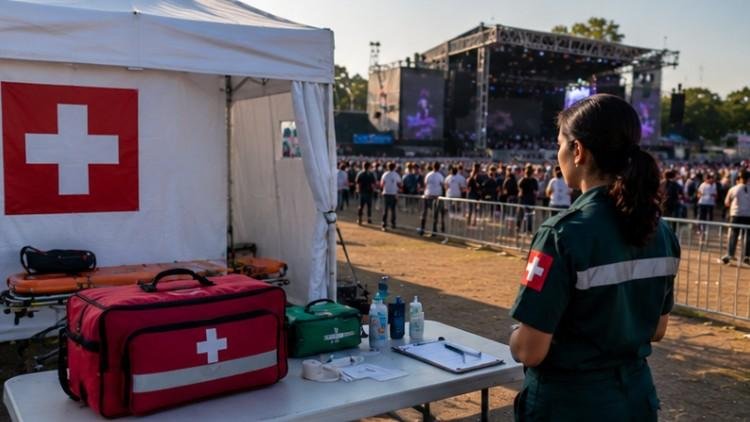
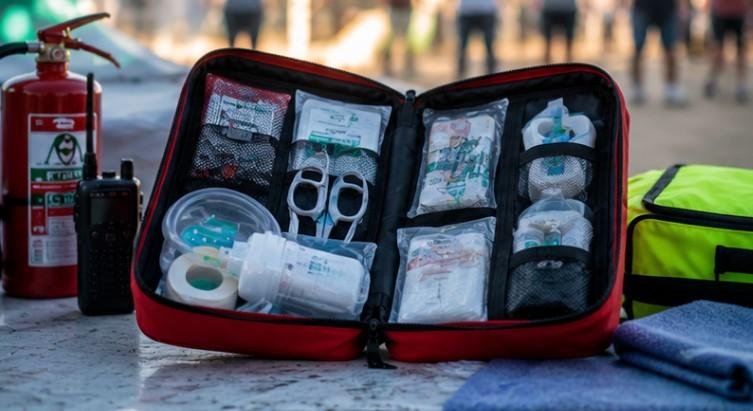
    First aid kits must be clearly visible and fully stocked near high-traffic areas like entrances, main stages, and food vendors. Stocking critical items such as bandages, gauze, antiseptic wipes, burn cream, cold packs, and medical shears ensures your team can handle immediate injuries. Keeping these kits accessible allows staff to provide rapid care without delaying response times.

    Setting Up Designated Medical Tents and Stations

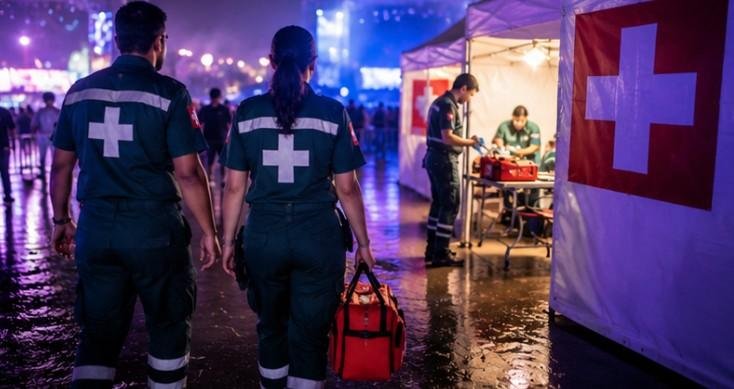
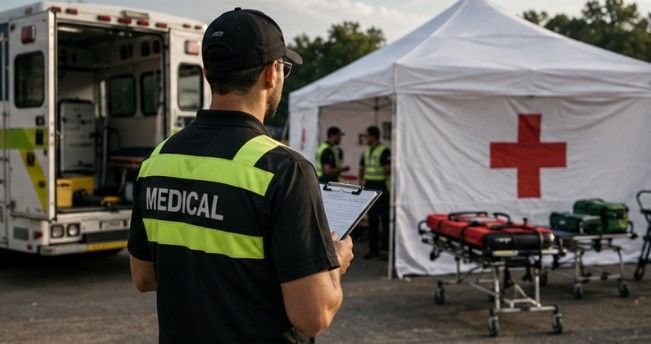
    Set up a quiet, clearly marked first aid tent or room for larger gatherings with easy access for emergency vehicles. Main first aid posts should feature climate control, private examination areas, and direct ambulance egress routes. Distributing roaming foot patrols equipped with mobile radios keeps your team responsive across massive event footprints.

    Reliable Communication and Equipment Standards

    Maintain reliable radios or phones to contact local emergency services immediately during critical incidents. Equipping first aid personnel with dedicated radio channels prevents communication breakdowns during network outages. You can review life-saving response protocols and first aid steps through the American Red Cross training guidelines to ensure your gear aligns with national standards.

    Staffing Protocols and Dedicated Professional Medical Personnel

    Determining the exact number of medical personnel on site prevents your team from under-preparing for high-risk crowds.

    Staffing Protocols and Dedicated Professional Medical Personnel

    Role of Assigned Trained Responders

    Assign staff members certified in CPR, AED use, and basic first aid to be present across all shifts. Having basic trained responders stationed at key checkpoints ensures continuous monitoring of the crowd. These responders act as the first line of defense, providing basic care and alerting advanced teams during serious medical events.

    Hiring Professional Dedicated Medical Services

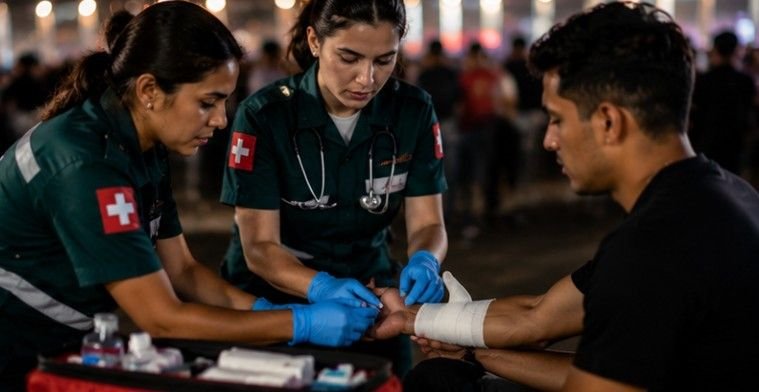
    Hire dedicated medical staff such as emergency nurses or EMTs for large festivals, high-risk athletic competitions, or events serving alcohol. Professional responders possess the clinical skills necessary to handle severe trauma and administer advanced life support. Contracting certified medical providers ensures your event meets professional standards of emergency care.

    Local Permit Alignment and Headcount Mandates

    Check local municipal guidelines, such as the City of San Diego Special Events Medical Planning Document or the District of Columbia Special Events Health and Safety Guide, to see precise tier mandates for your expected headcount. Aligning your medical staffing ratios with local permit rules prevents costly municipal fines and event shutdowns.

    Evaluating Risk Factors and Crowd Environment

    Assessing environmental and demographic variables allows you to customize your medical response plan effectively.

    Crowd Demographics and Specialized Patient Care

    Account for older adults, children, or active participants who may need specialized medical care. Older crowds may experience higher rates of cardiac or mobility issues, while family events require pediatric first aid supplies. Tailoring your medical setup to your specific demographic profile ensures no guest is left unprotected.

    Environmental Elements and Weather Planning

    Plan for extreme heat by providing hydration stations and cooling tents, or prepare heating elements for cold weather conditions. Extreme outdoor weather spikes dehydration and heat exhaustion cases rapidly among energetic crowds. Adjusting your medical staffing and supply levels for nighttime operations ensures continuous safety under all conditions.

    Activity Intensity and Emergency Ambulance Readiness

    Activity Intensity and Emergency Ambulance Readiness

    Strenuous sports or physical challenges require standby ambulances and advanced life support capabilities on site. High-intensity activities significantly elevate the potential for severe orthopedic injuries and acute cardiovascular stress. 

    Having dedicated ambulance transport units on standby ensures immediate transit to local trauma centers without delaying care. For operational planning templates, you can also consult the Scouting America Event Safety Checklist to streamline your pre-event risk analysis.

    Real-Life Implementation Steps for First Aid Requirements 

    Executing your safety plan flawlessly requires a systematic step-by-step approach leading up to doors opening.

    1. First, conduct a comprehensive risk audit of your venue layout, identifying potential bottleneck zones, trip hazards, and exposed electrical wiring.
    2. Second, map out dedicated emergency vehicle access corridors so ambulances can enter and exit without driving through dense crowds.
    3. Third, finalize your medical staffing contract and verify all provider certifications, state licenses, and malpractice insurance documents.
    4. Fourth, run pre-event radio tests and brief your safety crew on basic emergency communication protocols.
    5. Fifth, inspect all onsite medical stations right before gates open to confirm AED batteries are charged and trauma supplies are fully stocked.

    Frequently Asked Questions 

    1. What are the 5 C’s of an event?

    The 5 C’s of event planning are Concept, Control, Content, Coordination, and Culmination. These fundamental pillars guide professional organizers through designing, managing, and executing safe, successful public or private gatherings from start to finish.

    2. What are first aid requirements for events?

    The first aid requirements for events encompass the necessary medical personnel, supplies, equipment, and emergency response plans mandated by law to treat attendee injuries and sudden illnesses promptly at a venue.

    3. What are the 3 C’s in basic first aid?

    The 3 C’s of basic first aid stand for Check, Call, and Care. First responders check the scene for immediate danger, call emergency medical services for help, and render appropriate care to the injured person.

    4. How to do an event checklist?

    Build an event checklist by listing all operational tasks chronologically, grouping them by category like safety, vendor logistics, or staffing, assigning deadlines, and verifying each item during pre-event walk-throughs.

    Keep The Party On Safely

    Mastering all first aid requirements for events is your ultimate blueprint for managing risk, keeping crowds secure, and executing flawless gatherings. When you combine thorough risk assessments, clear EMT ratios, properly equipped medical stations, and reliable communication tech, your event stays fully safe and compliant. Take time to audit your venue’s medical readiness today so your guests can focus entirely on enjoying an unforgettable experience.

  • Save Your Festival: Medical Risk Assessment for Events Rules

    Save Your Festival: Medical Risk Assessment for Events Rules

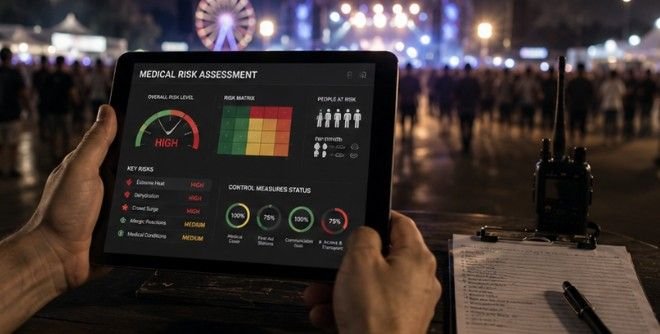
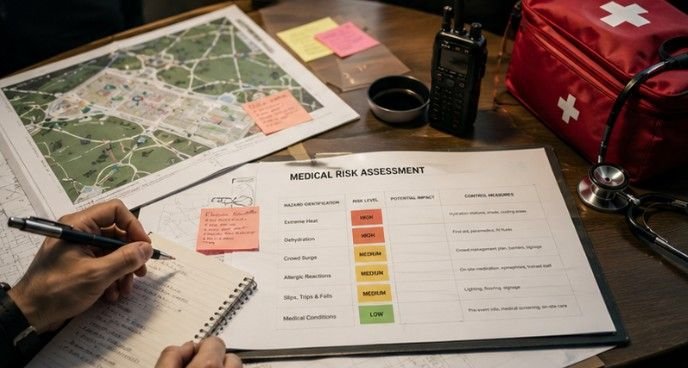
    Running a memorable gathering means keeping every attendee safe from unexpected health emergencies. Managing site logistics and crowd dynamics requires a rigorous medical risk assessment for events to protect lives, prevent delays, and maintain full compliance with local emergency regulations.

    Why a Medical Risk Assessment for Events Is Necessary

    Think of health planning like an invisible safety net at a circus. Without a proper medical risk assessment for events, one minor slip can turn your dream festival into a chaotic nightmare fast. Securing proper medical coverage keeps your party pumping safely and protects your reputation!

    Core Evaluation Factors in Medical Safety

    A robust safety framework relies on evaluating specific baseline metrics to build targeted defense mechanisms before doors open.

    Analyzing Crowd Demographics and Vulnerabilities

    Analyzing Crowd Demographics and Vulnerabilities

    Every crowd brings a distinct medical footprint based on age, mobility, and historical health data. Older demographics attending classic music showcases carry higher statistical risks for cardiovascular events or mobility-related falls. Conversely, youth-oriented sporting tournaments frequently encounter dynamic acute trauma, heat exhaustion, and dehydration.

    Evaluating expected participant numbers alongside vulnerable populations lets planners customize their clinical capabilities. Historical injury rates from past gatherings provide baseline projections for required supplies like splints or cardiac equipment. Identifying these unique demographic trends ensures medical teams are equipped for specific real-world emergencies.

    Evaluating Environmental and Physical Conditions

    Site geography and weather forecasts directly dictate your daily operational stress levels. Extreme heat waves rapid-fire dehydration cases into your medical tent, while freezing rain causes widespread hypothermia and slipping hazards. Outdoor open-air venues demand continuous weather monitoring and dedicated shelter zones for rapid heat relief.

    Indoor venue layouts require careful mapping of structural bottlenecks, stairwells, and emergency exits. Tight physical corridors slow down medical extraction teams trying to reach collapsed attendees inside packed crowd centers. Evaluating site terrain and indoor layout limits guarantees seamless access during urgent response operations.

    Substance Usage Patterns and Crowd Behavior

    Anticipating substance consumption is critical when designing on-site treatment capabilities. Events serving high volumes of alcohol routinely see elevated rates of physical trauma, acute intoxication, and aggressive behavior. Music festivals with young crowds often require specialized care zones for polysubstance overconsumption and anxiety attacks.

    Establishing specialized welfare spaces alongside formal medical stations prevents minor intoxication cases from overwhelming clinical personnel. Sedating intoxicated patients in quiet, monitored zones keeps main triage bays open for true medical crises. Proactive behavioral mapping keeps clinical resources focused where they are needed most.

    Resource and Response Planning Blueprint

    Translating initial evaluations into real-world protection requires structured deployment strategies and seamless emergency coordination.

    Medical Staffing Ratios and Capabilities

    Medical Staffing Ratios and Capabilities

    Calculating exact medical personnel depends on risk scoring models established by public health organizations. High-density crowds require a balanced mix of physicians, registered nurses, paramedics, and certified Emergency Medical Technicians (EMTs). Placing Advanced Life Support (ALS) capabilities on-site reduces heavy burdens on regional municipal health systems.

    Response teams must be distributed strategically rather than remaining static inside main medical tents. Deploying foot patrols and mobile bike teams enables rapid medical arrival times under four minutes across large footprints. Maintaining flexible clinical staffing guarantees continuous care even during sudden crowd surges.

    First-Aid Station Placement and Access Routes

    Positioning first-aid stations requires balancing visible attendee access with clear ambulance egress corridors. Stations must feature prominent high-contrast signage, overhead lighting, and climate control to stabilize critical patients safely. Marking these points on digital event maps guides attendees directly without triggering secondary crowd choke points.

    Ambulance loading zones must remain completely free from physical obstructions, vendor booths, and foot traffic. Establishing dedicated vehicle corridors allows private transport units to enter and exit without hitting venue traffic jams. Strategic station placement saves precious minutes during life-threatening emergency transports.

    Local Hospital Integration and Communication

    Establishing direct communication lines with regional emergency operations centers coordinates seamless hospital handoffs. Notifying nearby trauma centers about your event scope, expected crowd sizes, and specialized risks prevents sudden hospital ER surges. Shared radio frequencies ensure immediate coordination between on-site supervisors and city 911 dispatchers.

    Integrating state or municipal emergency management standards guarantees full regulatory compliance across all operations. Utilizing recognized tools like the Risk Assessment Wizard or local council guidelines establishes strong legal defensibility for organizers. Unified interagency planning ensures your team acts as a cohesive extension of local emergency services.

    How to Conduct a Medical Risk Assessment for Events

    How to Conduct a Medical Risk Assessment for Events

    First, initiate a thorough walkthrough of the physical venue alongside local fire marshals and EMS leadership. Identify potential physical hazards, review emergency exit gates, and map out dedicated ambulance loading corridors. Checking physical entry points early ensures your transport routes remain completely clear during peak crowd congestion.

    Second, gather crowd demographic projections, event duration details, and expected weather conditions to build a formal risk matrix. Calculate your required staffing ratios based on recognized guidelines like those published in the National Institutes of Health (NIH) literature. Position certified EMTs, paramedics, and first-aid supply hubs strategically near high-density operational zones.
    Third, test all primary and secondary communication channels between on-site medical posts, private security, and municipal 911 dispatch. Review standardized triage protocols, such as the START method, to streamline care during unexpected mass casualty situations. Establishing clear escalation trees keeps every emergency worker aligned when critical seconds count.

    Fourth, continuously monitor site operations throughout the gathering, making real-time adjustments as weather or crowd behavior shifts. Log every patient contact, minor treatment, and hospital transfer into secure medical databases immediately. Completing post-event documentation reviews refines future health strategies while satisfying insurance underwriters and city health inspectors.

    Frequently Asked Questions

    1. How to conduct a risk assessment for an event?

    Identify physical hazards, analyze crowd demographics, calculate risk scores using severity and likelihood matrices, assign control measures, and regularly review plans with local emergency services.

    2. What are the 5 things a risk assessment should include?

    A thorough assessment must include explicit hazard identification, evaluation of affected populations, detailed risk control protocols, clear staff responsibility assignments, and formal documentation tracking operational reviews.

    3. What are some examples of event risks?

    Common examples include extreme weather exposures, severe crowd compression, foodborne illness outbreaks, structural equipment failures, excessive alcohol intoxication, and acute health emergencies like cardiac arrest.

    4. What is the Generic All-hazards risk assessment Tool for Mass Gathering Events?

    Developed by the World Health Organization alongside the Johns Hopkins Center for Health Security, this digital tool helps organizers evaluate public health vulnerabilities and emergency capacities for mass gatherings.

    Lock in Safety and Party On With Confidence

    Executing a professional medical risk assessment for events transforms scary operational uncertainties into a bulletproof safety plan. Prioritizing attendee wellbeing through expert staffing, hazard mapping, and interagency communication guarantees your gathering stays secure and fully compliant. Take charge of your site health planning early to deliver smooth, legendary events that keep everyone protected from start to finish!

  • Immersive Celebration Experiences Everyone Can Enjoy From Start to Finish

    Immersive Celebration Experiences Everyone Can Enjoy From Start to Finish

    I started noticing that the celebrations people talked about weeks later rarely had the biggest budgets. Instead, they were the ones where everyone felt like part of the action instead of simply watching it unfold. Guests remembered unexpected moments, shared laughs, and little surprises that pulled them into the event from the moment they arrived.

    I also found that the best parties didn’t rely on a packed schedule. They created a sense of discovery. Whether it was an interactive game, a themed activity, or a surprise performance, those experiences made people stay engaged naturally. That’s what separates a memorable celebration from one that’s quickly forgotten.

    Why Immersive Celebrations Leave a Lasting Impression

    Why Immersive Celebrations Leave a Lasting Impression

    Immersive celebration experiences go beyond decorations and entertainment. They invite guests to participate rather than observe. Instead of moving from one planned activity to another, attendees become part of the story unfolding around them.

    This approach appeals to all kinds of events, including birthdays, school festivals, corporate gatherings, neighborhood block parties, and community celebrations. When people feel involved, conversations happen more naturally, strangers become teammates during activities, and the overall atmosphere feels energetic without being forced.

    Sensory engagement plays a major role in creating this feeling. Coordinated lighting, themed music, tactile decorations, and even subtle scents help establish a consistent environment. Rather than overwhelming guests, these elements quietly reinforce the event’s theme and make every space feel intentional.

    Design the Experience Instead of Just the Schedule

    Many event planners spend weeks organizing timelines but very little time thinking about the guest journey. A celebration becomes much more memorable when every stage feels connected.

    That experience can begin with creative invitations that introduce the event theme before guests even arrive. Once they enter, themed welcome areas, interactive displays, and live performers immediately set expectations that this won’t be a typical gathering.

    Interactive storytelling is another way to maintain excitement throughout the event. Rather than simply watching entertainment, guests can solve riddles, uncover hidden spaces, collect clues, or make choices that influence what happens next. These small moments of participation create stronger emotional connections than passive entertainment alone.

    Even simple surprises can keep guests engaged. A hidden dessert room, an unexpected musical performance, or a secret activity revealed later in the evening gives everyone something new to discover.

    Entertainment That Invites Guests to Participate

    Entertainment That Invites Guests to Participate

    The best entertainment encourages guests to join in at their own comfort level.

    Some people enjoy energetic competitions, while others prefer creative activities or casual conversations. Offering different ways to participate allows everyone to feel included without pressure.
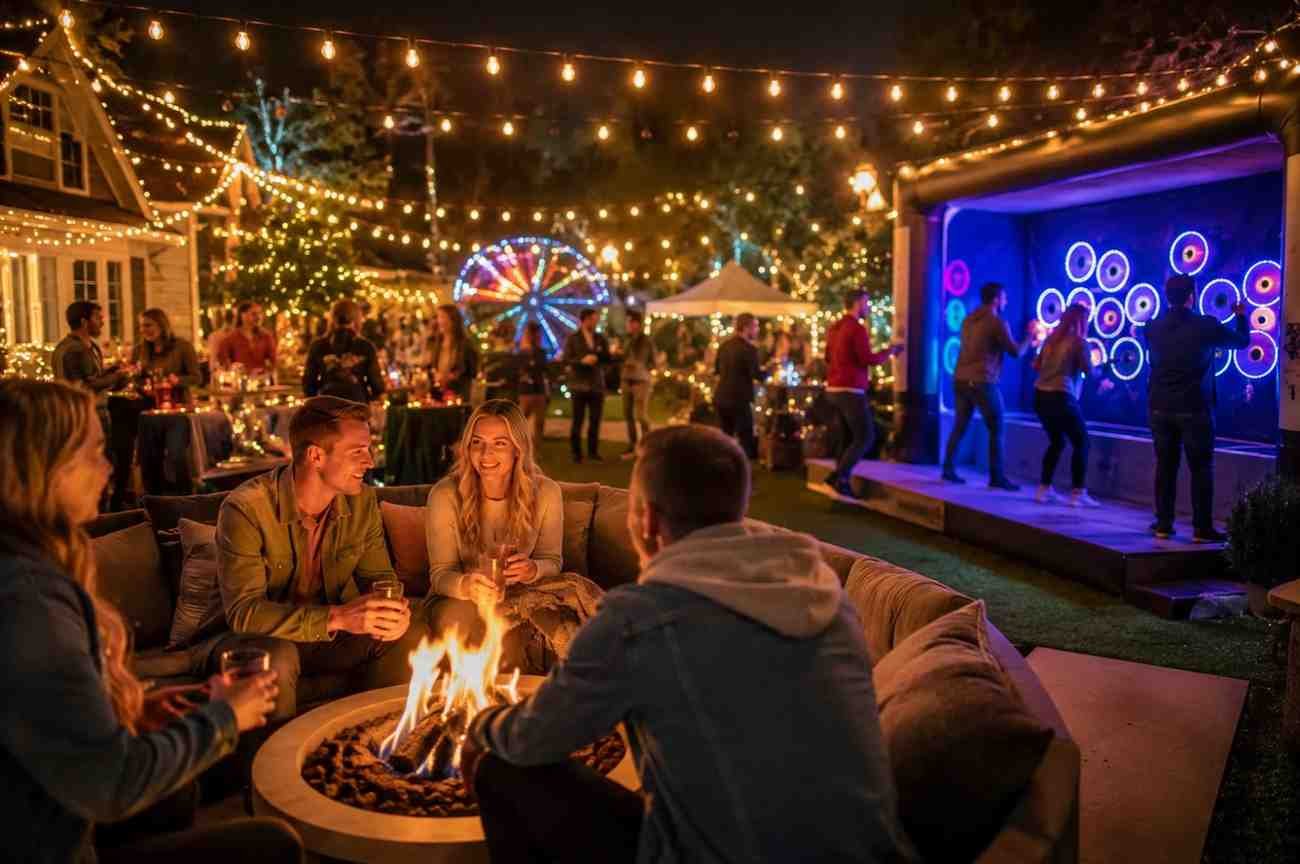
    Popular interactive entertainment ideas include:

    • Escape-style challenges
    • Collaborative games
    • Mechanical rides
    • Live performers interacting with guests
    • DIY craft stations
    • Trivia competitions
    • Silent discos
    • Interactive photo booths

    Rather than filling every minute with scheduled performances, create spaces where people naturally gather and engage with one another.

    Activities That Appeal Across Generations

    Successful celebrations recognize that every guest enjoys different experiences.

    Children may gravitate toward inflatables, obstacle courses, or carnival games, while teenagers often enjoy competitive attractions and social spaces. Adults appreciate entertainment that encourages conversation without demanding constant participation.

    Combining these experiences creates an event where families can spend time together instead of splitting into separate groups.

    This is why many organizers look for carnival attractions that work for all age groups, allowing grandparents, parents, teenagers, and children to enjoy the same celebration without anyone feeling left out.

    Bring Your Theme to Life

    Themes become much more memorable when guests can interact with them instead of simply looking at decorations.

    A Time-Travel Gala, for example, could guide visitors through different decades using changing décor, era-specific music, themed refreshments, and performers dressed for each period. Each section feels like stepping into another chapter of history.

    A Living Storybook transforms the venue into an interactive fantasy where characters provide clues leading guests toward hidden experiences, surprise desserts, or exclusive entertainment.

    Meanwhile, a Neon Arcade Odyssey creates a high-energy environment filled with glowing décor, collaborative arcade games, projection-mapped walls, and multiple silent disco channels where guests choose their own music.

    The goal isn’t creating the most elaborate theme possible. It’s creating opportunities for guests to actively explore it.

    Make Every Guest Feel Comfortable

    Make Every Guest Feel Comfortable

    Immersion should never mean pressure.
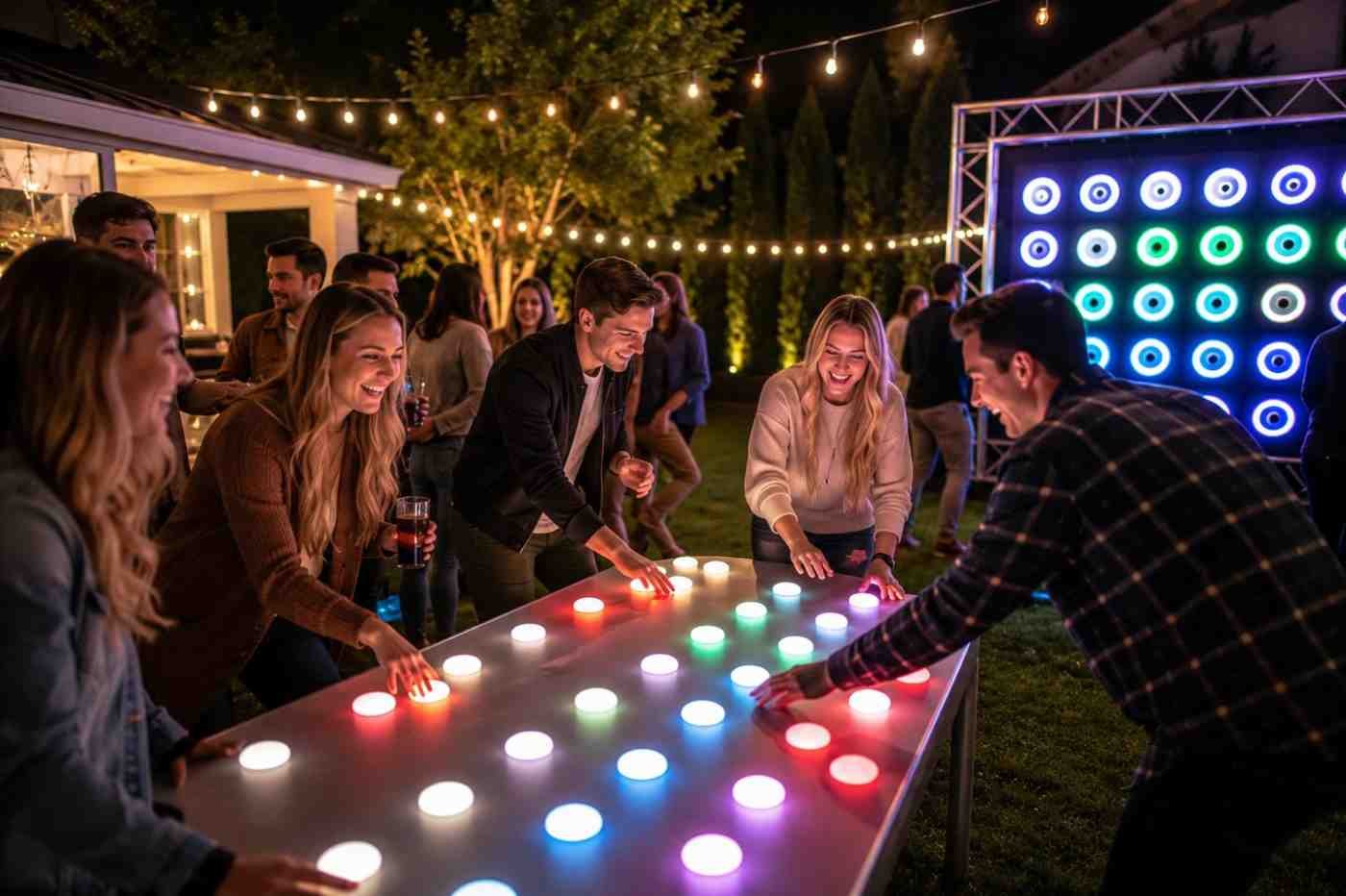
    The strongest celebrations recognize that participation looks different for everyone. Some guests eagerly volunteer for games, while others enjoy observing before joining later.
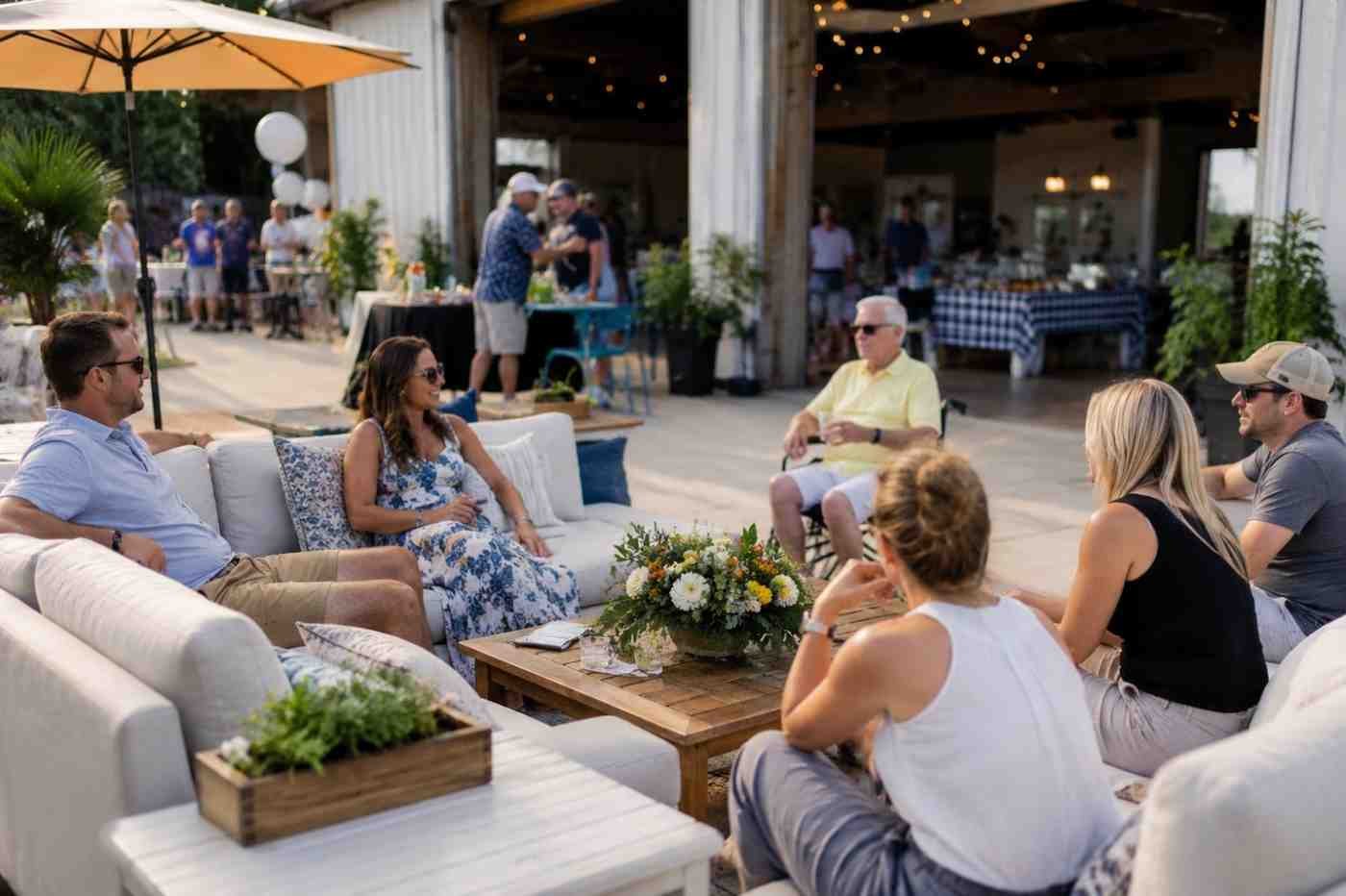
    Providing optional participation levels allows people to choose how involved they want to be.

    Accessibility should also be part of the planning process. Clear walkways, mobility-friendly layouts, sensory-friendly quiet areas, and food choices that accommodate different dietary preferences help ensure every guest feels welcome.

    These thoughtful details often leave a stronger impression than expensive decorations because they demonstrate genuine consideration for everyone attending.

    Common Mistakes That Interrupt the Experience

    Even well-planned events can lose momentum if guests become confused or overwhelmed.

    Some of the most common mistakes include overcrowding activity areas, scheduling too many attractions at once, relying on long announcements, or making guests wait between experiences.

    Transitions matter just as much as entertainment itself. Smooth movement between activities keeps excitement high and prevents people from disengaging.

    Another common mistake is making every activity mandatory. Giving guests freedom to explore creates a more relaxed atmosphere and allows everyone to enjoy the celebration in their own way.

    FAQs: Immersive Celebration Experiences Everyone Can Enjoy From Start to Finish

    1. What makes a celebration immersive?

    An immersive celebration encourages guests to participate through interactive activities, storytelling, themed environments, and sensory experiences instead of simply watching entertainment.

    2. Are immersive celebrations suitable for family events?

    Yes. They work especially well for family gatherings because they offer activities that appeal to children, teenagers, adults, and older guests at the same event.

    3. Do immersive celebrations require a large budget?

    Not necessarily. Creative storytelling, interactive games, themed décor, and thoughtful planning often have a greater impact than expensive entertainment alone.

    4. How can I keep guests engaged throughout the event?

    Offer a variety of interactive experiences, allow guests to explore freely, include surprise moments, and create opportunities for conversation and participation rather than relying only on scheduled performances.

    What Guests Remember Long After the Celebration Ends

    People rarely remember every decoration or every item on the menu, but they do remember how an event made them feel. Immersive celebration experiences create those lasting memories by encouraging curiosity, participation, and genuine connection. When every detail supports the overall experience, guests leave feeling like they were part of something special instead of simply attending another party.

    That’s the kind of celebration people continue talking about long after the lights go out.