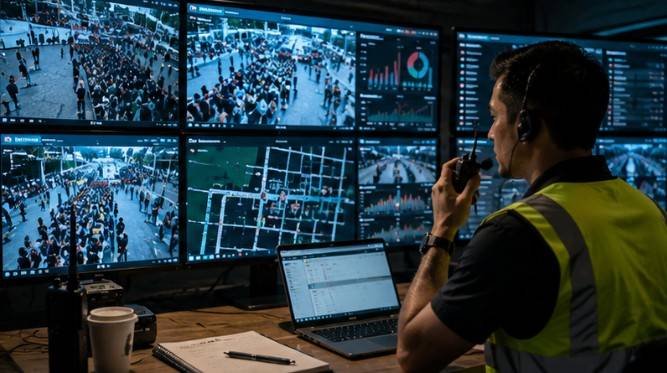
Standing near the main gates at my first festival, watching thousands of eager fans surge forward at once, taught me a lesson about event safety that stuck forever. Learning how to manage crowds at events isn’t just about placing plastic barricades or hiring extra security guards. It requires an active strategy built around human psychology, real-time communication, and smart venue design to keep everyone safe and smiling.
When people gather for concerts, sports games, or community expos, excitement runs high. High energy can quickly turn into confusion or danger if crowd density isn’t actively monitored. That is why building an adaptable safety culture before, during, and after your event makes all the difference.
Key Takeaways:
- Map out ingress and egress routes weeks before doors open to prevent hazardous entry surges.
- Cross-train ground staff in proactive de-escalation and real-time radio communication.
- Deploy RFID ticketing and density sensors to spot emerging venue bottlenecks instantly.
- Use serpentine barriers and high-contrast signage to maintain continuous queue movement.
Knowing How to Manage Crowds at Events Matters
Let’s face it, nobody attends a festival to get stuck in a human traffic jam. Learning how to manage crowds at events transforms potential chaotic stampedes into smooth, happy human rivers. When you master space design, your guests spend less time waiting in frustration and more time creating great memories.
Good crowd control preserves your event reputation, reduces security risks, and keeps local fire marshals thrilled. It is the invisible superpower that guarantees everyone goes home safe and sound.
Smart Planning and Venue Setup Before Doors Open
Proactive venue mapping prevents dangerous bottlenecks long before the first attendee arrives at your gate. Knowing your venue’s maximum legal capacity and never exceeding it forms the absolute bedrock of guest protection.
Mapping Ingress and Emergency Routes
Every successful gathering relies on smooth entry, exit, and emergency pathways. Setting up dedicated, well-marked lanes for incoming and outgoing guests keeps people moving in predictable directions. Avoid designing dead ends or tight 90-degree turns, as these naturally trap movement and create unnecessary pressure points during peak hours.
Setting Physical Barriers and Clear Signs
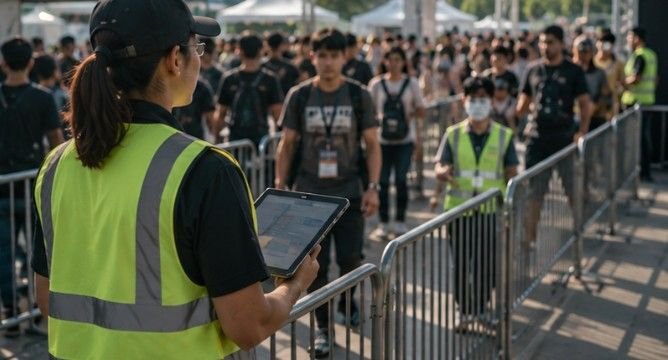
Physical barriers like ropes or metal fences guide people in neat, orderly lines toward ticket scanners. Bright, high-contrast, easy-to-read signs showing where exits, food, and restrooms are located remove guesswork for wandering attendees. Placing water stations and concession stands along wide secondary corridors encourages attendees to disperse evenly across the entire venue footprint.
Empowering Ground Teams and Operational Control
Ground teams serve as your frontline eyes and ears during high-energy gatherings. Proper staffing ensures that every square foot of your venue remains monitored and supported throughout the operational lifecycle.
Deploying Staff and Maintaining Clear Paths
Assign at least one trained crowd manager for every 250 attendees to keep vital pathways completely open. Security guards and helpers should be positioned along the sides of main paths so they do not accidentally block walking traffic.
Equipping your security personnel and volunteers with verbal de-escalation skills prevents minor arguments from turning into major disruptions.
Fast Communication and Staggered Exits
Clear communication keeps your safety operational plan running without hiccups. Use two-way radios or mobile tools so team members can talk quickly if a problem starts. When the event ends, release exiting crowds in stages or waves to stop massive bottlenecks at local transit hubs and parking structures.
Essential Action Steps to Manage Crowds at Events
Executing a seamless safety strategy relies on step-by-step tactical adjustments on game day. These practical adjustments transform complex venue layouts into organized, stress-free environments for attendees.
Step One: Set Up Serpentine Queue Systems with Clear Signage
Begin by organizing entry points with serpentine queue lines supported by highly visible directional signage. These winding queue layouts maximize available space, often accommodating nearly twice as many attendees compared to straight lines while maintaining a steady flow of movement.
Clear signs indicating entrances, ticket checkpoints, and security screening areas help eliminate confusion before guests even reach the venue. Well-designed queue systems reduce bottlenecks, minimize waiting frustrations, and create a more organized arrival experience, allowing attendees to enter safely and efficiently without unnecessary crowd buildup.
Step Two: Deploy Trained Staff at Key Decision Points
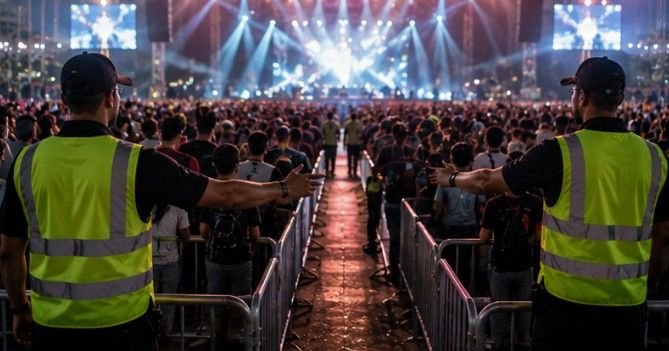
Position experienced event staff, volunteers, or security personnel at major intersections, entrances, exits, and high-traffic areas throughout the venue. Their primary responsibility is to provide clear directions, answer attendee questions, and guide people toward less crowded pathways whenever necessary.
Human interaction helps reduce hesitation and confusion, preventing groups from stopping suddenly in busy corridors. With visible assistance available, attendees feel more confident navigating the venue while overall pedestrian movement remains smooth, controlled, and predictable.
Step Three: Stagger Entertainment and Activity Schedules
Avoid scheduling multiple headline attractions or major performances at the exact same time. Instead, stagger performances, intermissions, and popular activities across different stages or venue zones. This strategic scheduling spreads attendees more evenly throughout the event and prevents sudden waves of people moving simultaneously between locations.
Reducing synchronized crowd movement significantly lowers congestion in corridors, food courts, and common gathering areas, making the venue safer and more comfortable for everyone.
Step Four: Use Real-Time Communication Channels
Keep attendees informed through live public address announcements, digital display boards, and mobile app push notifications, especially during peak arrival or departure periods. Instant communication allows organizers to redirect guests toward alternative entrances, exits, parking areas, or less crowded sections whenever congestion begins to form.
Timely updates also reassure attendees, reduce uncertainty, and encourage better crowd cooperation, helping maintain a calm, orderly atmosphere even during busy periods.
Step Five: Review Performance After the Event
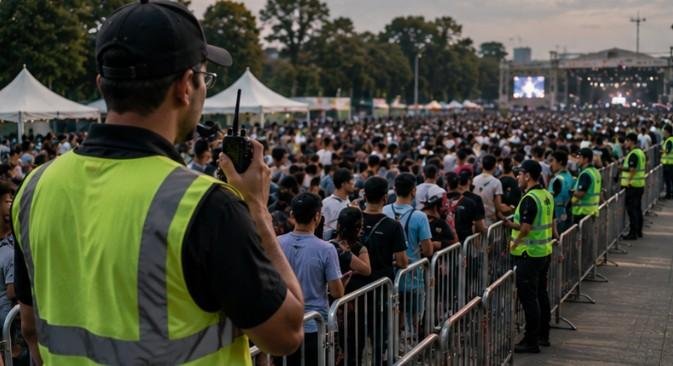
Conduct a comprehensive post-event evaluation by reviewing incident reports, crowd movement data, staff feedback, and attendee observations. Identify successful crowd management strategies as well as areas requiring improvement, such as congestion hotspots or communication gaps.
Analyzing operational performance enables organizers to refine emergency procedures, improve staffing plans, and strengthen future safety protocols. Continuous evaluation ensures every event becomes more efficient, secure, and enjoyable than the last.
Frequently Asked Questions
1. How to control crowds in an event?
How to control crowds in an event comes down to proactive planning, clear signage, physical serpentine barriers, well-trained security staff, real-time density monitoring, and continuous communication across all venue entry and exit points.
2. What are the five C’s of event management?
The five C’s are Concept, Coordination, Control, Culmination, and Closeout. In event safety, Control specifically focuses on crowd dynamics, risk management protocols, emergency readiness, and maintaining steady attendee flow throughout the venue footprint.
3. What are common crowd management mistakes?
Common crowd management mistakes include understaffing entry gates, ignoring bottleneck points near restrooms, failing to train staff in de-escalation, relying on single exit points, overfilling maximum venue capacity, and lacking rapid two-way communication tools.
4. What are the three main methods of crowd control?
The three main methods are physical controls like barricades and turnstiles, procedural controls such as timed entries and staff positioning, and psychological tactics including clear directional signage, calming lighting, and regular public announcements.
Wrapping Up the Chaos: Your Safety Success Story
Mastering how to manage crowds at events comes down to preparation, clear communication, and adaptable ground management. When you design smart layouts, empower your staff with proper training, and use modern tech tools, safety happens naturally. Prioritizing crowd flow keeps your attendees protected, relaxed, and fully focused on enjoying an unforgettable event experience from start to finish.
Leave a Reply