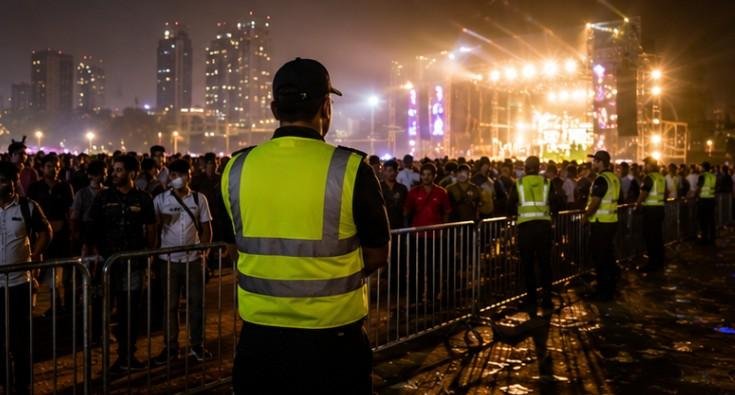
A lively event may look effortless, yet smooth entrances, clear aisles, and calm announcements come from preparation. I have seen one small bottleneck change the mood fast. A crowd management plan for events gives teams a shared playbook before excitement turns into confusion.
Key Takeaways
- Know legal capacity.
- Map crowd routes.
- Train staff early.
- Set action triggers.
- Review incidents after guests leave.
Pre-Event Planning
Strong event safety begins before opening, with accurate numbers, a realistic site plan, and people who understand their responsibilities.
Confirm Venue Capacity
Start with the legal occupancy set by the venue or local authority. Count everyone required, then choose a reliable attendance method. Ticket scans, clickers, wristbands, and controlled re-entry can prevent accidental overcrowding.
Cornell University’s event crowd management guidance uses the ACE approach: keep aisles clear, know capacity, and keep exits unobstructed. Cornell also requires one crowd manager per 250 attendees for its events. Treat that figure as local guidance, not a universal national rule, because legal requirements vary.
Map The Full Layout
Draw a site map showing entrances, screening lanes, seating, stages, restrooms, first aid, accessible routes, exits, vehicle lanes, and assembly areas. Mark narrow corridors, stairs, blind spots, and places where crowd streams may cross.
Walk the route at event time. Check lighting, surfaces, weather, and visibility. Ask where queues could grow, where mobility may be restricted, and how emergency responders would reach a patient during peak attendance.
Assign Trained Staff
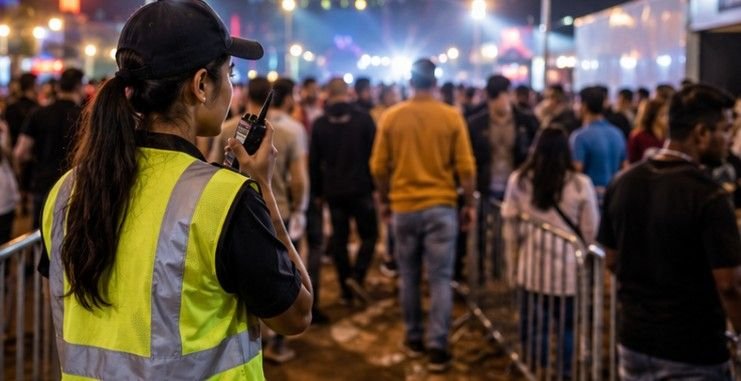
Place identifiable staff at entrances, queues, stage fronts, accessible areas, and exits. Give each person a supervisor, exact post, radio channel, emergency contact method, and authority level.
Staffing should reflect attendance, crowd behavior, alcohol service, venue complexity, weather, and local rules. The City of Oxnard requires trained crowd managers for events expecting more than 500 people at one per 250 attendees, showing why organizers must check their own permitting requirements.
How To Build A Crowd Management Plan For Events
The best plan follows the guest journey from arrival to departure, then adds simple responses for anything that interrupts that journey.
Profile The Crowd
Estimate attendance by hour. Record arrival peaks, age groups, mobility needs, language needs, alcohol service, family attendance, and venue familiarity. A conference crowd behaves differently from a standing concert audience.
Consider predictable movement around performances, session changes, giveaways, food service, weather shifts, and closing time. This profile helps planners choose staffing posts, barrier layouts, announcements, and monitoring methods.
Set Action Triggers
Write down warning signs that require action. Useful triggers include a queue exceeding its holding area, a blocked aisle, slow entrance throughput, a zone reaching capacity, repeated medical calls, severe-weather alerts, or radio failure.
Connect each trigger to a response and decision-maker. Actions may include opening another lane, redirecting guests, pausing admission, sending a roaming team, or contacting emergency services. Avoid one universal density number because movement, terrain, barriers, and crowd mood change risk.
Test The Plan
Run a staff briefing, site walk, and radio check before opening. For complex events, hold a tabletop exercise covering overcrowding, a missing child, power loss, severe weather, a medical emergency, and evacuation.
Ensure temporary workers understand location names, escalation steps, and backup communication methods. Record training attendance and correct gaps before guests arrive.
During The Event
Real-time crowd management keeps the plan active by watching conditions, protecting routes, and sharing information early.
Keep People Flowing
Keep aisles, corridors, stairs, gates, and exits free from equipment, standing guests, merchandise, and uncontrolled queues. Position staff where guests make decisions, not only where problems form.
Use barriers to guide movement without creating traps or tight turns. Separate arriving and departing guests where possible. Adjust food, restroom, merchandise, and attraction lines before they overlap. Cornell states that exits, corridors, stairs, and egress routes must remain clear.
Monitor Conditions

Supervisors should combine observation with ticket scans, counts, CCTV, radio reports, weather and queue checks. Technology supports judgment, but trained people must interpret behavior and act.
Watch for sudden stops, opposing crowd streams, barrier climbing, pushing, distress, blocked sightlines, or frustration. Record important interventions so supervisors understand changing conditions.
Make Clear Announcements
Tell attendees where exits, medical help, accessible services, water, transportation, and guest support are located. Give safety information before activities begin and repeat updates as conditions change.
Prepare short messages for evacuation, sheltering, delays, lost people, disruption, and cancellation. Use speakers, screens, alerts, staff instructions, and signs. Communication should be calm, specific, and accessible.
Emergency Protocols
Emergency planning matches each hazard with the right response instead of treating every incident as evacuation. Look out for temporary structure safety for events.
Protect Medical Access
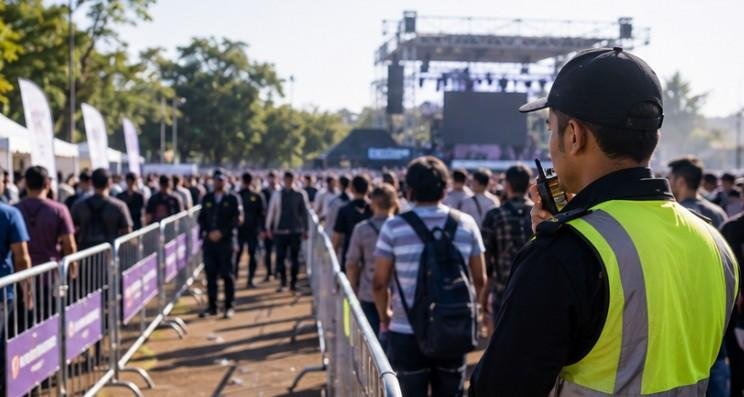
Place first aid in a visible location outside the densest zone. Keep emergency vehicle lanes, responder entrances, and routes to patients open.
Give staff a way to report location, patient condition, hazards, and access routes. Share the site map and command contacts with medical providers, security, venue leaders, and local emergency services.
Prepare Safe Evacuation
Identify primary and alternate exits, assembly areas, accessible evacuation routes, and staff responsible for checking spaces. Doors and gates must be usable without confusing procedures or unavailable keys.
Some threats require shelter-in-place or lockdown instead. Document who can order each action and how guests will receive instructions. The University of Mary Washington’s crowd management guidance offers a useful model for assigning exit, occupancy, communication, inspection, and coordination duties.
Review Every Incident
After the event, collect attendance data, queue times, radio logs, medical reports, security notes, complaints, and staff feedback. Discuss near misses, not only emergencies.
Update maps, triggers, staffing, and procedures while details are fresh. Assign each improvement to an owner and deadline. This review turns experience into stronger event safety.
Frequently Asked Questions
1. What Should A Crowd Management Plan For Events Include?
It should cover legal capacity, crowd profiles, venue maps, staffing, entry and exit procedures, communication, accessibility, emergencies, transport, monitoring triggers, training, and post-event review.
2. Is One Crowd Manager Needed For Every 250 Guests?
Some US institutions and local authorities use that ratio, but it is not universal. Confirm fire codes, permit terms, venue policies, and risk-based staffing needs locally.
3. How Can Organizers Prevent Event Bottlenecks?
Estimate traffic by time, map crossing routes, separate queues, monitor entrance speed, protect aisles, station staff at decision points, and redirect guests before congestion becomes unsafe.
4. Do Small Events Need A Written Crowd Plan?
Yes, when limited exits, alcohol, temporary structures, vulnerable guests, unusual activities, public access, or permit conditions create risks requiring coordinated staff action.
Keep The Cheers, Lose The Chaos
A memorable gathering should leave guests talking about the experience, not the exit line. A practical crowd management plan for events connects legal capacity, thoughtful venue flow, trained staff, accessible communication, emergency readiness, and post-event review. Build it around people and measurable triggers, then practice before opening. That preparation keeps guests comfortable, teams confident, events moving safely.
Leave a Reply