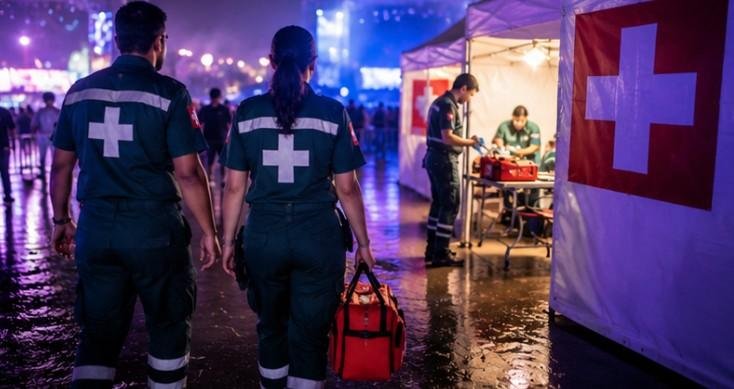
Planning a major festival or corporate gathering keeps our entire team on edge until every single guest heads home safe and happy. Meeting all the necessary first aid requirements for events is the single most critical step in protecting your attendees and shielding your venue from massive legal liability.
Navigating medical logistics does not have to feel overwhelming when you break down the planning process into manageable steps. As seasoned event safety coordinators, we have seen firsthand how quick response times save lives and keep minor injuries from turning into major emergencies.
First Aid Requirements Are Your Event’s Secret Superhero
Imagine throwing the most incredible festival of the year, only for a sudden sprained ankle or heat exhaustion incident to halt the entire show. Meeting first aid requirements for events is not just about checking off boring compliance boxes; it is your ultimate backstage pass to total peace of mind.
When your medical team is locked, loaded, and ready to roll, you can relax and watch your amazing event unfold without constantly sweating every minor bump or bruise.
Decoding Regulatory Standards for Event Medical Coverage
Understanding which government bodies oversee your venue ensures your event stays fully legal, permitted, and safe for everyone involved.
OSHA Workplace Standards Versus Public Attendee Safety
Occupational Safety and Health Administration guidelines mandate medical provisions for your paid staff and contractors under federal rules. While OSHA protects your workers, local city ordinances and state health departments set the rules for public attendees.
Balancing these two frameworks requires setting up first aid posts that serve both employees and guests seamlessly. You can review foundational workplace practise directly on the official OSHA Workplace Standards portal.
Local EMS Coordination and Municipal Permitting Rules
Municipalities usually require a formal event medical plan for crowds exceeding one thousand attendees. Submitting your plan to the local Safety Advisory Group or emergency services agency sixty to ninety days before your start date guarantees proper permits. Local emergency medical services agencies will evaluate your access routes and dedicated staging areas before issuing final approvals.
Insurance and Liability Mandates
Commercial general liability insurance policies strictly require adequate medical coverage on site. Neglecting proper first aid coverage opens your organization to severe negligence lawsuits if an attendee suffers preventable harm. Partnering with licensed medical staffing agencies shifts operational risk and satisfies insurer underwriting criteria effortlessly.
Essential Medical Supplies and Designated First Aid Stations
Equipping your medical team with the right gear ensures fast, to write event safety plan, efficient treatment for everything from minor cuts to severe cardiac arrest.
Strategic Placement of First Aid Kits
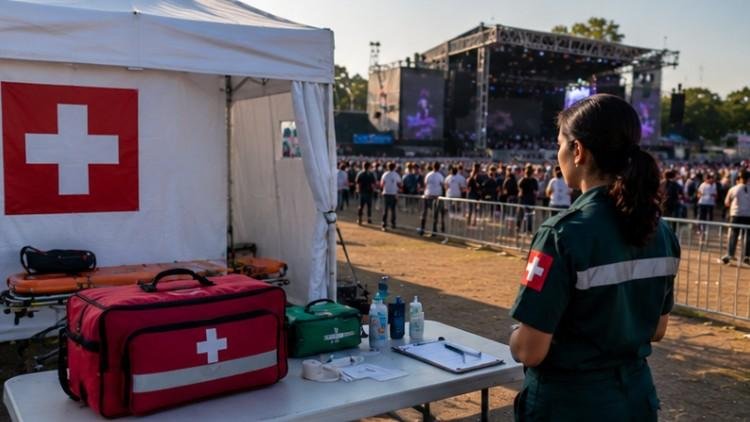
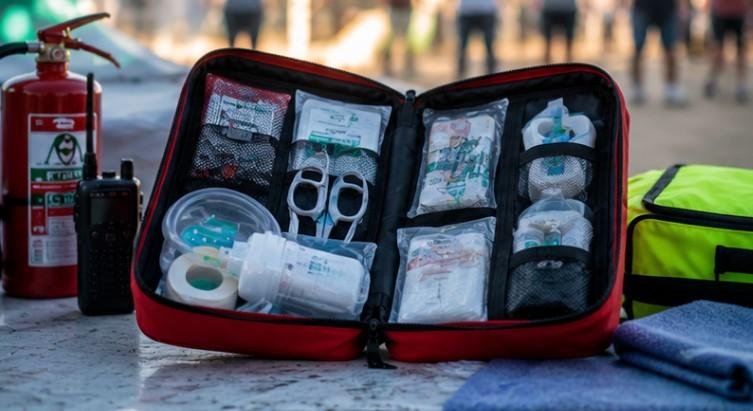
First aid kits must be clearly visible and fully stocked near high-traffic areas like entrances, main stages, and food vendors. Stocking critical items such as bandages, gauze, antiseptic wipes, burn cream, cold packs, and medical shears ensures your team can handle immediate injuries. Keeping these kits accessible allows staff to provide rapid care without delaying response times.
Setting Up Designated Medical Tents and Stations
Set up a quiet, clearly marked first aid tent or room for larger gatherings with easy access for emergency vehicles. Main first aid posts should feature climate control, private examination areas, and direct ambulance egress routes. Distributing roaming foot patrols equipped with mobile radios keeps your team responsive across massive event footprints.
Reliable Communication and Equipment Standards
Maintain reliable radios or phones to contact local emergency services immediately during critical incidents. Equipping first aid personnel with dedicated radio channels prevents communication breakdowns during network outages. You can review life-saving response protocols and first aid steps through the American Red Cross training guidelines to ensure your gear aligns with national standards.
Staffing Protocols and Dedicated Professional Medical Personnel
Determining the exact number of medical personnel on site prevents your team from under-preparing for high-risk crowds.
Role of Assigned Trained Responders
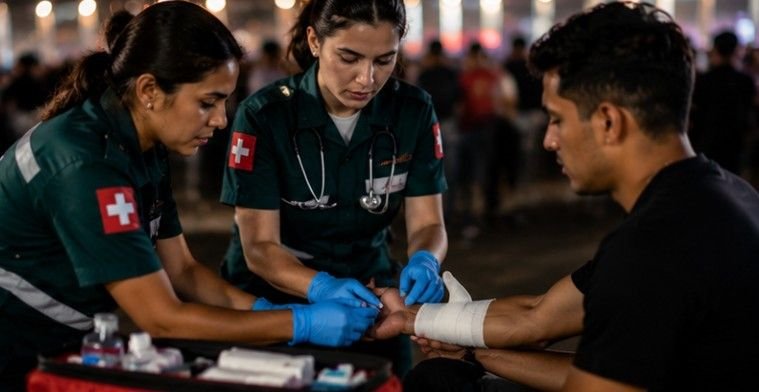
Assign staff members certified in CPR, AED use, and basic first aid to be present across all shifts. Having basic trained responders stationed at key checkpoints ensures continuous monitoring of the crowd. These responders act as the first line of defense, providing basic care and alerting advanced teams during serious medical events.
Hiring Professional Dedicated Medical Services
Hire dedicated medical staff such as emergency nurses or EMTs for large festivals, high-risk athletic competitions, or events serving alcohol. Professional responders possess the clinical skills necessary to handle severe trauma and administer advanced life support. Contracting certified medical providers ensures your event meets professional standards of emergency care.
Local Permit Alignment and Headcount Mandates
Check local municipal guidelines, such as the City of San Diego Special Events Medical Planning Document or the District of Columbia Special Events Health and Safety Guide, to see precise tier mandates for your expected headcount. Aligning your medical staffing ratios with local permit rules prevents costly municipal fines and event shutdowns.
Evaluating Risk Factors and Crowd Environment
Assessing environmental and demographic variables allows you to customize your medical response plan effectively.
Crowd Demographics and Specialized Patient Care
Account for older adults, children, or active participants who may need specialized medical care. Older crowds may experience higher rates of cardiac or mobility issues, while family events require pediatric first aid supplies. Tailoring your medical setup to your specific demographic profile ensures no guest is left unprotected.
Environmental Elements and Weather Planning
Plan for extreme heat by providing hydration stations and cooling tents, or prepare heating elements for cold weather conditions. Extreme outdoor weather spikes dehydration and heat exhaustion cases rapidly among energetic crowds. Adjusting your medical staffing and supply levels for nighttime operations ensures continuous safety under all conditions.
Activity Intensity and Emergency Ambulance Readiness
Strenuous sports or physical challenges require standby ambulances and advanced life support capabilities on site. High-intensity activities significantly elevate the potential for severe orthopedic injuries and acute cardiovascular stress.
Having dedicated ambulance transport units on standby ensures immediate transit to local trauma centers without delaying care. For operational planning templates, you can also consult the Scouting America Event Safety Checklist to streamline your pre-event risk analysis.
Real-Life Implementation Steps for First Aid Requirements
Executing your safety plan flawlessly requires a systematic step-by-step approach leading up to doors opening.
- First, conduct a comprehensive risk audit of your venue layout, identifying potential bottleneck zones, trip hazards, and exposed electrical wiring.
- Second, map out dedicated emergency vehicle access corridors so ambulances can enter and exit without driving through dense crowds.
- Third, finalize your medical staffing contract and verify all provider certifications, state licenses, and malpractice insurance documents.
- Fourth, run pre-event radio tests and brief your safety crew on basic emergency communication protocols.
- Fifth, inspect all onsite medical stations right before gates open to confirm AED batteries are charged and trauma supplies are fully stocked.
Frequently Asked Questions
1. What are the 5 C’s of an event?
The 5 C’s of event planning are Concept, Control, Content, Coordination, and Culmination. These fundamental pillars guide professional organizers through designing, managing, and executing safe, successful public or private gatherings from start to finish.
2. What are first aid requirements for events?
The first aid requirements for events encompass the necessary medical personnel, supplies, equipment, and emergency response plans mandated by law to treat attendee injuries and sudden illnesses promptly at a venue.
3. What are the 3 C’s in basic first aid?
The 3 C’s of basic first aid stand for Check, Call, and Care. First responders check the scene for immediate danger, call emergency medical services for help, and render appropriate care to the injured person.
4. How to do an event checklist?
Build an event checklist by listing all operational tasks chronologically, grouping them by category like safety, vendor logistics, or staffing, assigning deadlines, and verifying each item during pre-event walk-throughs.
Keep The Party On Safely
Mastering all first aid requirements for events is your ultimate blueprint for managing risk, keeping crowds secure, and executing flawless gatherings. When you combine thorough risk assessments, clear EMT ratios, properly equipped medical stations, and reliable communication tech, your event stays fully safe and compliant. Take time to audit your venue’s medical readiness today so your guests can focus entirely on enjoying an unforgettable experience.
Leave a Reply