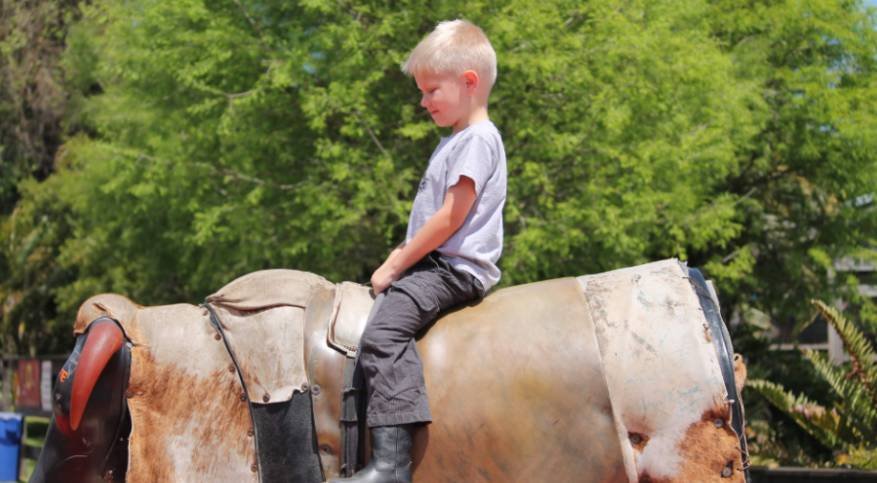
The first time I climbed onto a mechanical bull, I assumed strength would keep me in the saddle. I squeezed every muscle, held my breath and fell almost immediately. The most useful mechanical bull riding tips for beginners are not about overpowering the machine. They are about controlling tension, reacting early and staying centered.
My most effective technique is simple: anchor with the legs, absorb movement through the torso and adjust before the next turn. Once I stopped treating the ride like a wrestling match, I stayed mounted longer and felt more in control.
Why Beginners Fall So Quickly
Most first-time riders become rigid as soon as the bull moves. They tighten their shoulders, lock their elbows and lean too far in one direction.
A rigid body cannot adapt quickly. When the bull changes direction, the rider’s entire body moves as one stiff unit. That makes a small shift feel much larger.
I use a different approach. My thighs stay active, but my waist, shoulders and free arm remain responsive. My lower body creates stability while my upper body manages balance.
This “anchor, absorb, adjust” method is the original framework I use to remember the correct technique:
- Anchor with the thighs and riding hand.
- Absorb motion through a relaxed torso.
- Adjust your weight before the movement becomes extreme.
Prepare Before Getting on the Bull
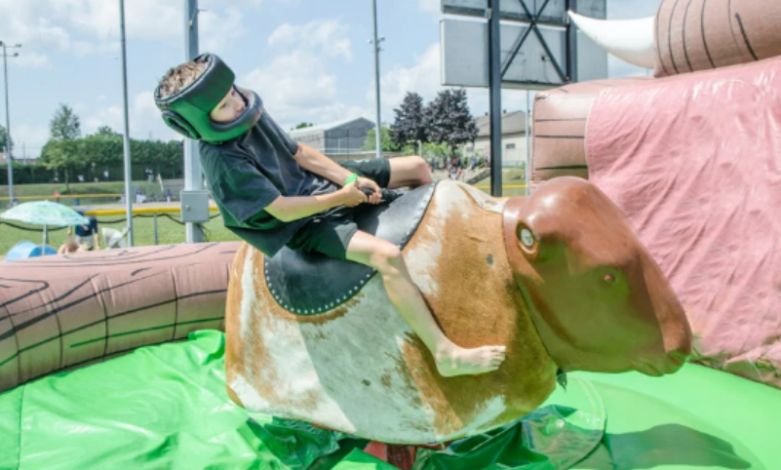
Good riding starts before the operator presses the controls. A quick safety check can reduce avoidable risks and help you focus on technique.
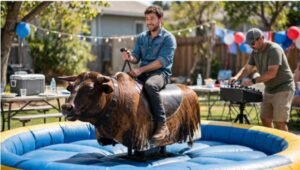
Mechanical bulls are also popular unforgettable attractions for corporate events because they combine spectator entertainment with an activity guests can try at their own comfort level. When one is part of a larger event, proper setup and operator supervision become even more important.
Ask for a Beginner-Friendly Ride
Tell the operator that this is your first attempt. Ask for a low speed and gentle movement pattern.
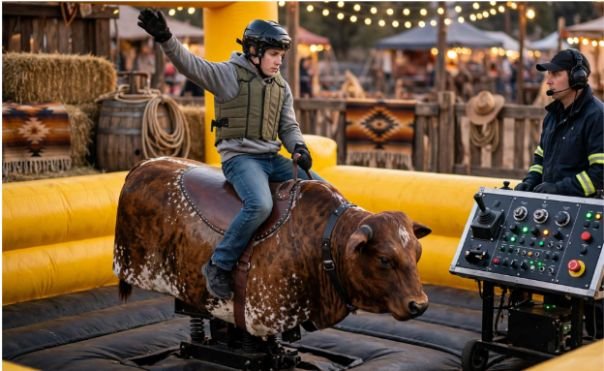
A responsible operator should explain the rules, show you how to hold the strap and confirm that you understand how to dismount. Amusement ride safety standards cover areas such as operation, maintenance, inspection and operator procedures.
Do not allow friends to pressure the operator into increasing the difficulty. Your first goal is learning how the machine moves, not setting a party record.
Check the Landing Area
The inflatable landing surface should appear fully inflated, unobstructed and large enough to surround the bull. Avoid riding when people, shoes, drinks or equipment remain inside the inflatable area.
The U.S. Consumer Product Safety Commission advises following manufacturer instructions and using inflatable devices on suitable, properly prepared surfaces.
Remove Loose Accessories
I remove my hat, watch, long earrings, necklace and anything stored in loose pockets. These items can fall, distract me or catch against clothing.
Long hair should be secured in a ponytail, braid or bun. Clear vision matters when the bull begins changing direction.
Use the Correct Mechanical Bull Grip
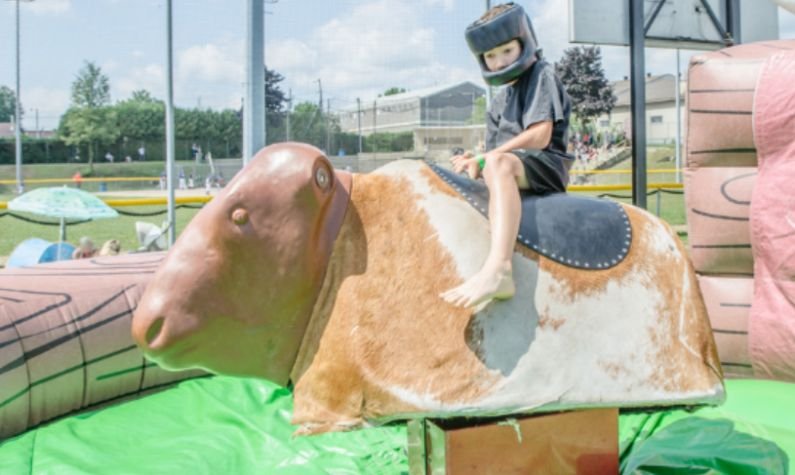
A secure grip provides stability without freezing the shoulders. These mechanical bull riding tips for beginners work best when the riding hand and free hand perform different jobs.
Hold the Strap With One Hand
Use your dominant hand to hold the rope, handle or leather strap. Wrap your fingers securely without twisting your wrist into an uncomfortable position.
Many riders prefer placing the palm upward because it can create a firm connection with the strap. However, follow the operator’s instructions and the specific equipment design.
Avoid holding on with both hands unless the operator specifically directs you to do so. A two-handed grip can square the shoulders and limit your ability to counterbalance.
Use Your Free Hand for Balance
Raise your non-riding hand around shoulder or head height. Keep the elbow bent and responsive.
I treat my free arm like the balancing pole used by a tightrope walker. When the bull turns left, the arm can move right. When the bull drops forward, the arm can shift behind me.
Do not wave wildly. Small corrections usually work better than dramatic movements.
Master the Best Mechanical Bull Riding Position
Correct posture gives you space to react. Poor posture forces you to recover after your balance has already disappeared.
Squeeze With Your Thighs
Grip the bull with your inner thighs rather than pinching only with your knees. The pressure should feel firm but sustainable.
I avoid using maximum force from the first second. That exhausts my legs quickly. Instead, I maintain steady pressure and tighten briefly during sharper movements.
Stay centered over the saddle. Sliding toward the neck or rear reduces control and makes the next dip harder to manage.
Keep Your Upper Body Relaxed
Your shoulders should remain low rather than pulled toward your ears. Keep your chest open and your lower back flexible.
Think of your legs as the anchor and your torso as a spring. A spring absorbs movement. A rigid board gets thrown.
Relaxed does not mean limp. Keep enough core engagement to control your posture without bracing every muscle.
Position Your Feet Correctly
Let your legs sit slightly forward while keeping your feet clear of moving parts. Pointing the toes downward may help some riders maintain contact, but avoid forcing the ankles into an awkward position.
Never wrap your legs around ropes, straps or mechanical components. Your legs must remain free when it is time to dismount.
Move With the Mechanical Bull
The bull wins when you react too late. Watch its movement and make small adjustments as soon as the direction changes.
Counter Forward and Backward Dips
When the bull’s head drops forward, shift your shoulders slightly backward. This counters the forward pull.
When the front rises, bring your torso slightly forward. Do not throw your whole body in either direction. Move only far enough to keep your weight above the saddle.
I imagine that my chest should remain above my hips. Once my chest travels far beyond them, recovery becomes much harder.
Follow Turns Without Fighting Them
Allow your hips to follow the rotation while your shoulders make a smaller counter-movement. Fighting every twist wastes energy and often causes overcorrection.
A useful beginner drill is the “half-response rule.” When I feel tempted to make a large correction, I begin with half that movement. Small adjustments preserve balance and leave room for the bull’s next change.
Focus on the Bull, Not the Crowd
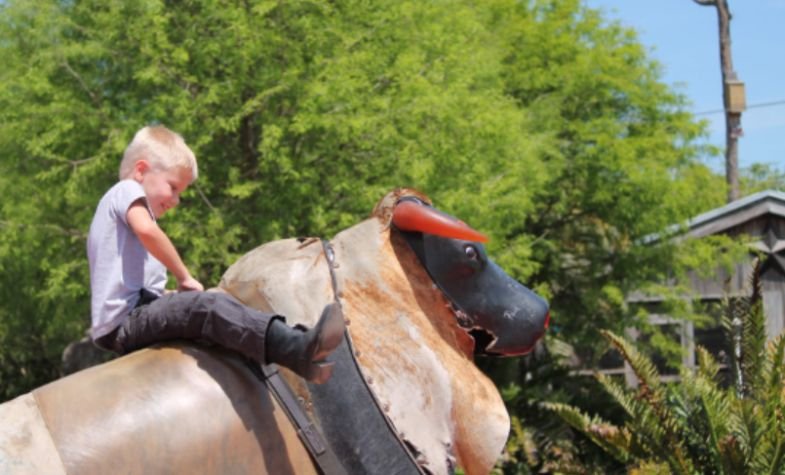
Keep your eyes on the bull’s head, shoulders or another fixed point near its front. This helps you recognize dips and turns.
Looking toward cheering friends rotates the head and shoulders. Your body often follows your eyes, pulling you away from the center.
I also avoid staring at the inflatable mat. Looking down encourages the chest to collapse forward. Keep your gaze active and your chin in a neutral position.
Wear the Right Clothes and Shoes
Clothing should allow movement without catching on the bull. Fitted jeans, athletic pants or other flexible trousers usually work well.
Avoid skirts, dresses, extremely short shorts and loose pants. Baggy clothing can shift, snag or interfere with your grip.
Wear secure, closed-toe footwear. Sneakers or properly fitted boots are more suitable than sandals, flip-flops or high heels. Follow the rental company’s footwear rules because some operators may require riders to remove shoes.
Empty your pockets before riding. A phone, wallet or set of keys can become uncomfortable during a fall.
Know How to Fall Safely
No technique guarantees that you will stay mounted. Falling is a normal part of the activity, so knowing when to release matters.
When I feel completely separated from the saddle, I let go rather than hanging from one arm. I aim to slide onto the inflatable surface without reaching out with a locked elbow.
Do not try to land standing. Let the padded surface receive your body, then move away from the bull when the operator tells you it is safe.
Stop riding after a hard impact, especially if you hit your head or develop dizziness, confusion, nausea, balance trouble or a worsening headache. The CDC lists repeated vomiting, slurred speech, weakness, seizures and increasing drowsiness among signs that require emergency medical attention.
Anyone recovering from a suspected concussion should not return to physical activity until medically cleared.
A Simple Practice Method for First-Time Riders
I divide my first ride into three short stages.
During the opening seconds, I concentrate only on staying centered. I check my thigh pressure, riding hand and breathing.
Next, I begin using my free arm. I make small counter-movements while watching the bull’s head.
Finally, I practice responding to dips. I lean slightly opposite the bull’s movement without making dramatic corrections.
This staged method prevents information overload. Instead of trying to perfect every technique at once, I add one skill after establishing another.
Common Beginner Mistakes
The most common mistake is leaning toward the bull’s head. Riders often do this because it feels safer, but a sudden forward dip can send them over the front.
Other mistakes include holding with two hands, watching the crowd, locking the riding arm and squeezing until the legs become exhausted.
Some riders also treat the free arm as decoration. It should actively support balance. Keep it lifted, loose and ready to counter the bull’s motion.
Finally, never ignore the operator. Clear communication between operators and guests is a core part of amusement attraction safety.
For a complete breakdown of mounting, posture, movement and dismounting, learn to ride a mechanical bull before your first attempt.
Frequently Asked Questions
1. How long does a beginner usually stay on a mechanical bull?
A first ride may last only a few seconds, but controlled posture matters more than the time displayed.
2. Should beginners lean forward or backward on a mechanical bull?
Stay centered, lean slightly backward during a forward dip and shift slightly forward when the bull’s front rises.
3. Can I ride a mechanical bull with both hands?
Use one hand unless the operator gives different instructions, because your free hand helps you counterbalance turns and dips.
4. What are the best mechanical bull riding tips for beginners at a party?
Start slowly, follow the operator, grip with your thighs, keep your torso relaxed and release safely when you lose the saddle.
Saddle Up Without Showing Off
My biggest improvement came when I stopped trying to look fearless. A controlled beginner ride feels smoother than a tense attempt driven by pride.
Remember the three-part method: anchor with your legs, absorb movement through your torso and adjust early. Ask for a gentle setting, focus on the bull and accept that falling is part of the experience.
Your next step is simple. Practice the correct seated position before the machine starts. That five-second posture check may keep you riding longer than any last-minute burst of strength.