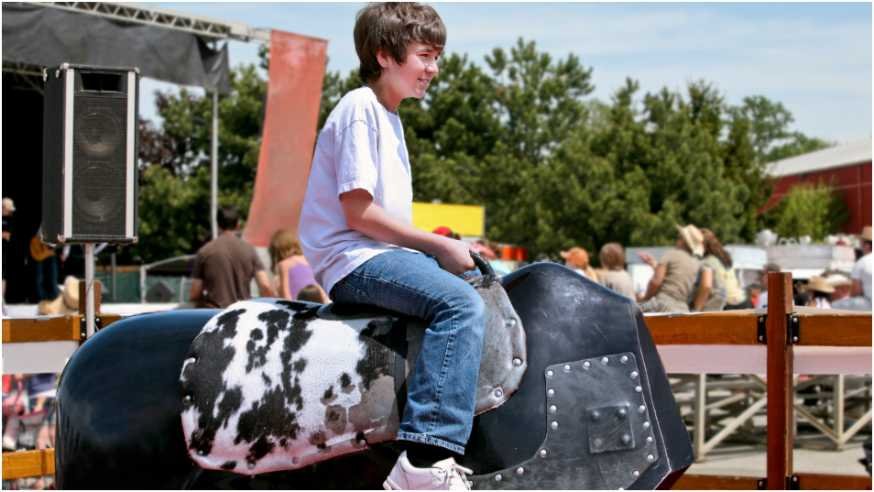
The secret to how to ride a mechanical bull is not overpowering the machine. It is staying centered while the bull tries to move your hips away from your shoulders.
I approach every ride as a balance challenge, not a strength contest. A firm grip helps, but rhythm, posture, leg pressure, and quick weight shifts keep a rider aboard longer.
What Makes a Mechanical Bull Difficult?
A mechanical bull can pitch forward, rise backward, spin, or combine movements. Those directional changes move your center of gravity beyond the bull’s base.
Many beginners respond by tightening every muscle. That reaction usually makes balance worse. A rigid upper body cannot follow the machine smoothly.
Instead, I focus on keeping my lower body connected while allowing my torso to respond. The goal is controlled movement, not complete stillness.
Mechanical bull riding still carries an injury risk. A study of emergency department cases found that sprains and strains were the most common injuries. Fractures and upper-extremity injuries were also reported.
What to Do Before Riding
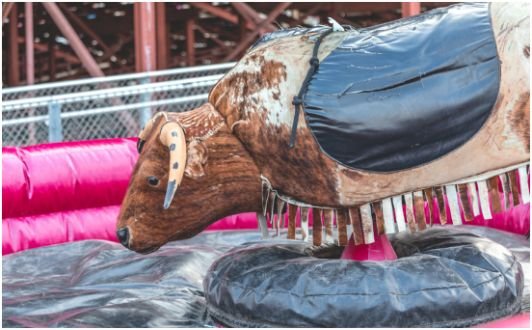
Preparation affects both performance and safety. I never treat the mounting area like an ordinary party game.
Check the Ride and Operator
A trained operator should control the speed and stop the bull when a rider loses control. The ride should also have a wide, unobstructed, padded landing area.
Commercial inflatable amusement equipment is covered by standards addressing installation, operation, inspection, maintenance, and operator training.
Before mounting, ask the operator to begin slowly. A gradual start gives you time to understand how that specific machine moves.
Follow the operator’s posted height, weight, age, and health restrictions. Limits vary between machines and rental companies, so never assume every bull follows identical rules.
Wear the Right Clothing
Long pants protect the inside of your legs from rubbing against the bull. Jeans or other durable pants usually work well.
Wear closed-toe shoes that remain secure during a fall. Sneakers and properly fitted boots are practical choices. Avoid flip-flops, loose sandals, high heels, skirts, dresses, dangling jewelry, and loose accessories.
A glove may reduce friction on the gripping hand. However, it should not interfere with the ride’s safety mechanism or prevent you from releasing the handle.
Know When Not to Ride
Do not ride while intoxicated. Mechanical bull riding depends on coordination, judgment, balance, and reaction speed, all of which alcohol can impair.
I would also stay off the ride after a recent concussion, fracture, surgery, joint injury, or serious back or neck problem. Pregnant guests and anyone with a condition affected by sudden movement should follow medical advice and the operator’s restrictions.
How to Ride a Mechanical Bull Step by Step
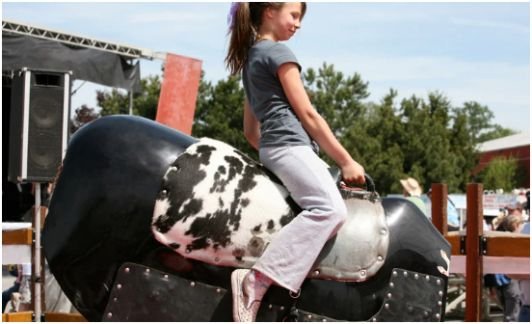
Learning how to ride a mechanical bull becomes easier when each body part has a specific job.
Mount Near the Front
Wait until the operator confirms that the machine has stopped. Use the designated entry point and avoid stepping on control cables, blowers, or inflatable walls.
Sit slightly forward, near the base of the handle. Sitting too far back gives the bull more leverage over your hips.
Center your weight evenly. Your shoulders, hips, and the bull’s centerline should initially form one vertical line.
Build a Secure One-Handed Grip
Hold the strap or handle with your dominant hand unless the operator instructs you differently. Close your fingers firmly without twisting the wrist into an extreme angle.
I use enough pressure to stay connected, but I avoid a desperate “death grip.” Pulling constantly with the arm creates fatigue and can drag the shoulders out of position.
Keep your gripping elbow bent. A locked elbow transfers more sudden movement into the wrist and shoulder.
Some machines use a rider-operated safety switch, wrist cord, or magnetic control. Use that device exactly as the operator explains. Manufacturer instructions may require the rider’s safety magnet to remain correctly positioned for the machine to operate.
Anchor Yourself With Your Legs
Squeeze the bull with your inner thighs, knees, and calves. Your legs create the main physical connection to the body of the machine.
Do not pinch only with your knees. That narrow grip can make your hips bounce. Spread the pressure along as much of your inner leg as the bull’s shape allows.
Keep your feet clear of moving components. Never hook a foot beneath a strap, saddle edge, or structural part.
Keep Your Hips Responsive
Your hips should follow the bull while your shoulders remain closer to the center. Think of your waist as a hinge between a stable upper body and a moving seat.
When the bull drops forward, allow your hips to follow while bringing your shoulders slightly back. When the front rises, move your hips forward rather than folding at the waist.
The adjustment should remain small. Dramatic leaning often sends the rider beyond the point of recovery.
Use Your Free Arm for Counterbalance
Keep your non-gripping arm raised and relaxed. Move it naturally to counter the direction in which your body begins to fall.
When your weight shifts right, the free arm can move left. When the machine pitches forward, the arm may move back slightly.
Do not windmill wildly. Large arm swings can rotate your shoulders and make the imbalance worse.
Look Forward
Keep your head up and look toward the bull’s head or a fixed point beyond it. Looking down encourages your shoulders to collapse forward.
A forward gaze also helps you notice changes in direction sooner. Your body responds faster when your eyes remain level.
Mechanical Bull Balance Tips: The Three-Point Test
My original three-point balance test gives beginners a fast way to diagnose their posture. During a slow practice round, check three contact points:
- Your gripping hand feels secure but not painfully tight.
- Both inner legs maintain steady contact with the bull.
- Your free arm can move without pulling your torso off-center.
If one point fails, the other two must work harder. For example, weak leg pressure forces the gripping arm to carry too much load.
The test also explains why strength alone rarely solves the problem. Efficient riders distribute control across several body parts instead of depending on one exhausted arm.
How to React to Different Bull Movements
Knowing how to ride a mechanical bull requires reacting to movement rather than trying to predict every motion.
When the bull spins left, keep your chest near the center while allowing your hips to rotate with it. Move your free arm right to counter the turn.
When the bull spins right, reverse the response. Avoid throwing your full upper body against the rotation.
When the head dips, shift your shoulders back slightly and keep your hips connected. When the front rises, press the hips forward while keeping the chest open.
Combined spinning and bucking creates the hardest challenge. During these movements, shorten your reactions. Small, fast corrections are more effective than one large lean.
Common Mechanical Bull Riding Mistakes
The most common mistake I see in beginner technique is trying to overpower every movement. The machine can change direction faster than a rider can pull against it.
Other frequent errors include:
- Sitting too far back
- Looking at the floor
- Locking the gripping elbow
- Holding the handle with both hands without operator approval
- Letting the knees spread apart
- Leaning from the shoulders instead of moving the hips
- Wearing unsuitable footwear
- Refusing to release the handle after losing control
Instructions can vary by equipment. Some operators require one-handed riding, while others may use different beginner rules or safety systems. Always follow the instructions for the actual machine rather than copying a technique from another venue.
How to Fall From a Mechanical Bull More Safely
Falling is part of the activity. A good exit matters as much as a long ride.
Once you know you cannot recover, release the handle. Hanging on while your body falls away from the bull may place extra force on the wrist, elbow, or shoulder.
Tuck your chin slightly and keep your limbs relaxed. Let the padded landing surface absorb the fall.
Avoid extending a stiff arm toward the floor. Upper-extremity injuries were the most commonly affected body region in the emergency department study of mechanical bull injuries.
After landing, pause before standing. Your balance may feel unsteady, and other riders should not enter until you have cleared the area.
Seek medical attention after severe pain, visible deformity, loss of consciousness, confusion, breathing difficulty, numbness, weakness, or an inability to bear weight.
How Long Should a Beginner Ride?
A beginner should focus on control rather than a record-setting time. Ask for a slow round and stop before your grip, legs, or posture fail completely.
My preferred progression has three stages:
First, spend a short round learning the forward and backward motion. Next, add a slow spin. Only attempt faster combined movements after you can remain centered during both.
Rest between attempts. Fatigued hands and inner thighs reduce control, even when the rider still feels confident.
Frequently Asked Questions
1. How do beginners ride a mechanical bull?
Beginners should start slowly, sit forward, grip with one hand, squeeze with both legs, keep the free arm raised, and make small balance corrections.
2. Should you lean forward or backward on a mechanical bull?
Remain centered, then shift slightly opposite the pitch: shoulders back when the bull dips forward and hips forward when its front rises.
3. How do you stay on a mechanical bull longer?
Use steady leg pressure, a bent gripping arm, responsive hips, a level gaze, and small counterbalancing movements instead of pulling with brute force.
4. Is riding a mechanical bull dangerous?
Injuries can occur, so use a trained operator, follow all restrictions, ride sober, wear secure clothing, and confirm that the landing area is properly padded.
Ride Smart, Cowboy
Mastering how to ride a mechanical bull starts with accepting that the machine controls the speed, but you control your posture.
I would choose one goal for the first ride: stay centered during a slow pitch. Once that feels natural, add spinning and faster changes. Keep the legs engaged, the upper body loose, and the ego outside the inflatable ring.
Leave a Reply