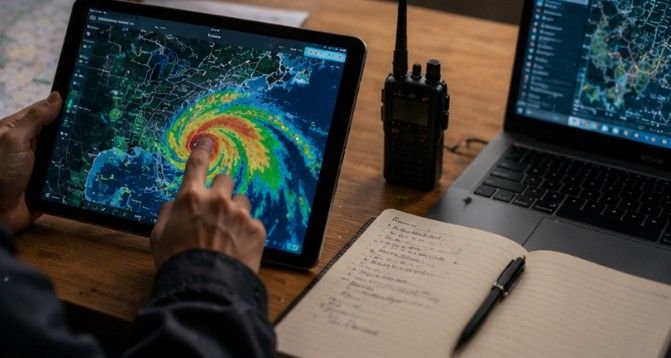
Organizing open-air gatherings brings undeniable energy, but unpredictable conditions can ruin the best setup without an outdoor event weather contingency plan. Keeping guests safe and assets protected requires proactive planning rather than last-minute guesswork. Seamless execution depends on building an airtight operational framework long before doors open.
Key Takeaways
- Establish precise meteorological triggers for lightning, high winds, and extreme temperatures.
- Assign a single safety lead with absolute authority to pause or evacuate.
- Activate multi-channel communication systems to keep staff and attendees updated quickly.
- Secure backup indoor venues and structure vendor contracts with clear rain dates.
- Conduct structured timeline checks at 72 hours, 24 hours, and event day.
Establishing Preparation Steps and Decision Timelines
Setting up clear operational checkpoints weeks in advance removes emotion from high-stakes decisions when bad weather approaches your venue.
Reviewing Forecasts at 72 Hours Prior
The critical preparation phase begins three days out by tracking regional micro-meteorological trends and monitoring convective storm potential. Production teams must review precipitation probabilities, track incoming front speeds, and place secondary rentals like sidewalls, temporary flooring, and extra generators on standby.
Establishing early contact with equipment suppliers ensures backup assets remain reserved without incurring full deployment fees prematurely.
Assessing Risks at 24 Hours Prior
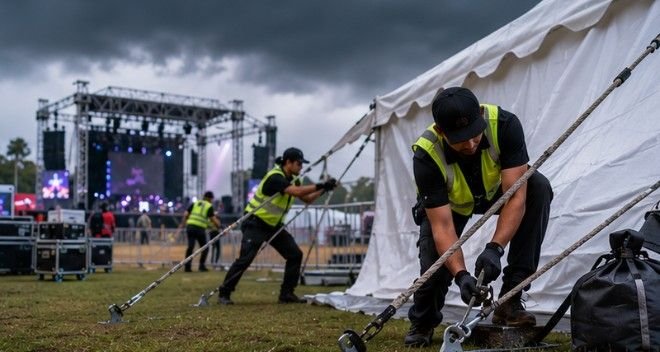
When the clock hits the one-day mark, leadership must re-evaluate updated local radar models and local weather warnings. If severe weather probability crosses established risk thresholds, executive leads must make the formal call to alter site layouts, erect protective covers, or initiate postponement workflows.
Making timely decisions prevents wasteful setup labor while giving vendors sufficient notice to protect sensitive gear.
Designating a Single Decision Maker
Operational chaos occurs when safety calls require full committee approvals during fast-moving atmospheric threats. Event organizers must assign one dedicated Safety Coordinator who holds exclusive, ultimate authority to halt, pause, or evacuate the gathering.
This individual operates free from commercial distraction, focusing entirely on monitoring live radar, communicating with municipal responders, and evaluating venue safety.
Setting Safety Triggers and Operational Actions
Vague safety guidelines create confusion, making exact numerical thresholds vital for swift risk mitigation.
| Weather Hazard | Action Trigger | Primary Safety Protocol |
| Lightning | Strike within 6 to 8 miles | Suspend operations immediately; direct guests to enclosed shelter |
| High Winds | Sustained winds over 20–25 mph | Lower temporary staging, secure signage, and collapse inflatable structures |
| Extreme Heat | Heat Index above 100°F | Activate misting stations, distribute free water, and staff medical tents |
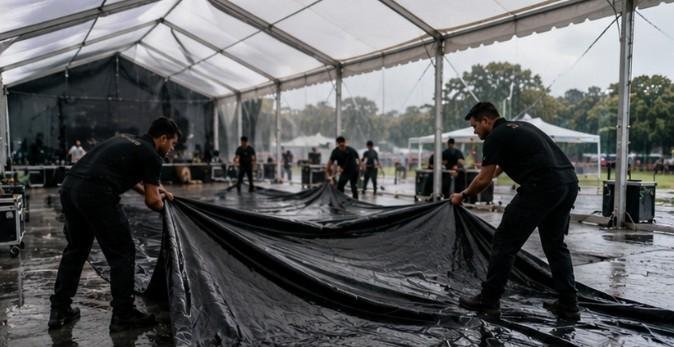
| Heavy Rain | Persistent ground saturation | Cover electrical connections, place turf matting, and divert site drainage |
Lightning Protection and the 30/30 Rule
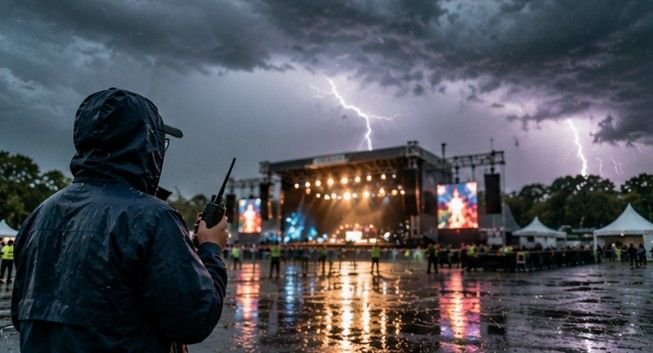
Lightning presents an immediate, non-negotiable threat to outdoor crowds and temporary metal stage structures. Safety crews must enforce the standard 30/30 rule, suspending outdoor activities instantly when the time between a lightning flash and thunderclap hits 30 seconds or less.
Operations must remain paused until 30 full minutes pass following the final audible thunderclap or detected strike.
Managing High Winds and Structural Integrity
Sudden wind gusts convert temporary tents, banners, and stage rigging into dangerous airborne hazards. Staff should monitor local anemometers continuously, securing lightweight items, lowering shade sails, and deflating arches when sustained winds reach 20 miles per hour.
If sustained gusts cross 30 miles per hour, crews must clear temporary structures and execute structural teardown protocols.
Extreme Heat Mitigation Protocols
Rising heat indexes pose severe health risks that demand aggressive, proactive site intervention long before heat stroke occurs. When heat indexes exceed 95 degrees Fahrenheit, venue teams must open shaded cooling zones, distribute free potable water, and station medical personnel near high-density crowd areas.
Providing continuous hydration keeps attendees safe and reduces emergency response calls.
Essential Resources and Planning Guidelines
Incorporating standardized industry frameworks ensures your safety documentation aligns with official municipal standards.
Event Ready Guide and Weather Services
Leveraging resources like the National Weather Service Event Ready Guide helps organizers understand storm motion, cloud-to-ground lightning behavior, and convective updates. Partnering with local weather offices provides access to specialized spotter forecasts tailored specifically to your venue coordinates.
Incorporating official meteorological data upgrades your risk assessment from simple guesswork to scientific precision.
Severe Weather Frameworks and Site Parameters
Consulting established inclement weather guidelines provides precise crowd-size sheltering metrics for temporary venues. Safety planners must calculate exact square footage requirements for enclosed emergency shelters based on total ticketed attendance.
Verifying that nearby permanent structures, solid buildings, or fully enclosed vehicles can safely house your entire guest list prevents dangerous overcrowding during sudden evacuations.
Action Plans and Site Checklists
Utilizing standardized hazardous weather action plans allows production managers to assign clear tactical duties across all operational teams. Implementing a physical site checklist guarantees that crew members verify sandbag weight ratings, secure electrical GFCI connections, and clear drainage paths before gates open. Documenting these physical checks creates an auditable record of thorough safety compliance.
Quick Implementation of Your Outdoor Event Weather Contingency
Executing an outdoor event weather contingency plan effectively requires a systematic, chronological workflow during live operations.

Begin by establishing your communication channels and testing all public address systems, SMS alert tools, and handheld radios during morning walk-throughs. Ensure all staff members know the exact terminology used for weather delays, site holds, and full evacuations to avoid mixed messaging over public channels.
Next, monitor live weather radar continually throughout the operating hours, keeping direct contact lines open with site security and local emergency services. If weather parameters cross your pre-determined safety triggers, communicate instantly with stage managers to pause performances and broadcast clear instructions across site displays and audio systems.
Finally, guide attendees calmly toward designated shelter zones using trained safety staff stationed along main exit corridors. Maintain active monitoring while crowds remain sheltered, providing regular public updates every fifteen minutes until atmospheric hazards pass completely and site engineers clear all physical structures for safe restart.
Frequently Asked Questions
1. Can you provide an example of a contingency plan for an event?
A complete example includes designated safety coordinators, explicit weather triggers like lightning within six miles, pre-mapped indoor evacuation locations, multi-channel communication tools, and clear vendor rain-date policies designed to protect staff, attendees, and equipment.
2. What is a weather contingency plan?
It is a formal operational document detailing safety thresholds, emergency protocols, leadership hierarchy, and crowd management procedures required to protect an outdoor event from severe weather hazards like lightning, heavy rain, high winds, or extreme heat.
3. What to do if it rains during your outdoor party?
Immediately cover sensitive electrical gear, secure outdoor furniture, deploy pop-up canopies or sidewalls, direct guests toward covered shelters, and smoothly move activities indoors or onto non-slip covered flooring to maintain safety and comfort.
4. What should you do if you are outside during a severe weather event?
Immediately seek shelter inside a sturdy, fully enclosed permanent building or hard-topped vehicle. Avoid open spaces, tall isolated trees, temporary tents, metal structures, and standing water until emergency officials confirm the hazard has completely cleared.
Weathering the Storm Like a Total Pro
Developing an outdoor event weather contingency plan bridges the gap between unpredictable climate risks and smooth event operations. Setting explicit weather triggers, defining decision timelines, and maintaining clear communication channels protects guest safety while safeguarding your financial investments. Plan early, track weather conditions continuously, and lead your production team with absolute confidence whenever the skies darken.
Leave a Reply