The first time I stood beside a mechanical bull, I assumed it simply rocked back and forth. After watching operators adjust speed, change movement patterns, and instantly stop the ride after every fall, I realized there was far more engineering involved. How does a mechanical bull work is a question that deserves more than a simple explanation.
Modern mechanical bulls combine electric motors, computerized controls, heavy-duty steel construction, and multiple safety systems to recreate the unpredictable movements of a real bucking bull. Every spin, dip, and kick is carefully controlled so riders experience excitement without sacrificing safety.
What Happens When the Ride Starts?
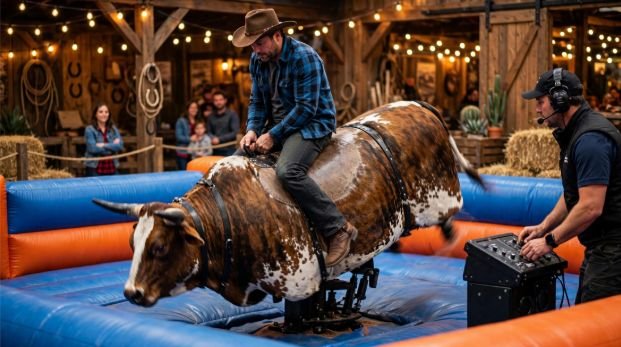
The moment a rider climbs aboard, the operator takes control through a dedicated console. Unlike amusement rides that follow one fixed path, a mechanical bull constantly changes movement based on operator input or programmed sequences.
The Role of the Operator
An experienced operator watches the rider’s posture before increasing the difficulty. Beginners usually start with gentle rocking motions, while experienced riders may face faster spins and sharper bucks.
The operator can instantly reduce intensity if the rider struggles or increase it gradually as confidence grows.
How the Bull Creates Realistic Motion
Instead of relying on one motor, the bull separates rotational movement from bucking movement. This combination prevents the ride from feeling repetitive and creates the unpredictable action riders expect at rodeos and Western-themed events.
The Dual-Motor System Explained

The heart of every professional mechanical bull is its dual-motor design. Each motor performs a separate task while working together over a central drive shaft.
Spin Motor
The first electric motor controls rotation.
Using a heavy-duty gearbox, it spins the bull a full 360 degrees in either clockwise or counterclockwise directions. Because the direction changes frequently, riders cannot easily predict their next movement.
Professional-grade gearboxes are built to withstand continuous operation during busy parties, festivals, and commercial events.
Buck Motor
Mounted directly above the spinning assembly sits the second electric motor.
Instead of rotating, this motor controls pitch, roll, and vertical bucking. Mechanical pitch arms lift and lower different parts of the bull, producing realistic forward dips, backward kicks, and side-to-side rolls.
The combination of spinning and bucking creates hundreds of possible movement patterns instead of repeating the same motion repeatedly.
How Riders Experience Different Difficulty Levels
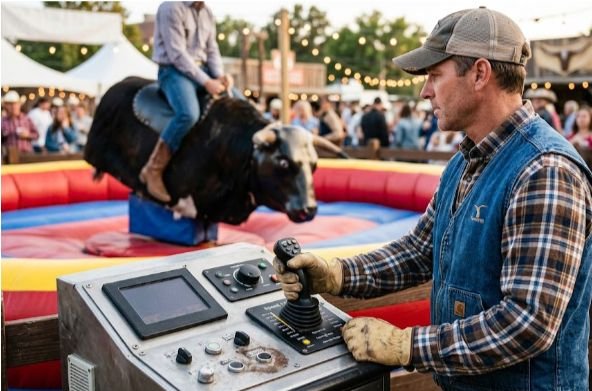
One reason mechanical bulls appeal to both children and experienced riders is the adjustable control system.
Manual Controls
Most commercial units include a joystick that lets the operator adjust movement in real time.
Difficulty commonly ranges from Level 1 through Level 10. Lower levels emphasize gentle rocking, while higher levels introduce aggressive spins, rapid direction changes, and stronger bucking movements.
The operator can react instantly instead of following a fixed program, making every ride unique.
Pre-Programmed Ride Modes
Many newer systems also include automated ride patterns.
These programs combine spinning and bucking using preloaded algorithms, creating standardized rides for competitions, public events, and timed challenges.
This consistency helps ensure riders compete under identical conditions while still enjoying realistic movement.
What Makes a Mechanical Bull Safe?
People often focus on falling off the bull, but professional machines are designed with multiple layers of protection.
Automatic Stop Systems
One of the most valuable safety features is the automatic stop mechanism.
Many premium mechanical bulls use magnetic breakaway handles or optical sensors. The instant a rider releases the handle or falls away, the electrical circuit breaks.
A quick-stop braking system immediately halts movement before the bull can continue spinning toward the fallen rider.
This technology significantly reduces the chance of secondary impacts.
Soft Components and Inflatable Landing Areas
Although the bull’s body is typically built from rigid fiberglass for durability, the head and horns are much softer.
Manufacturers often use high-density foam covered with realistic materials. The horns and head may even attach with magnets so they safely detach during harder impacts.
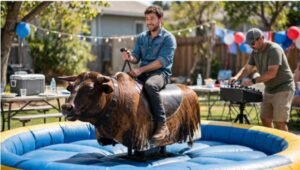
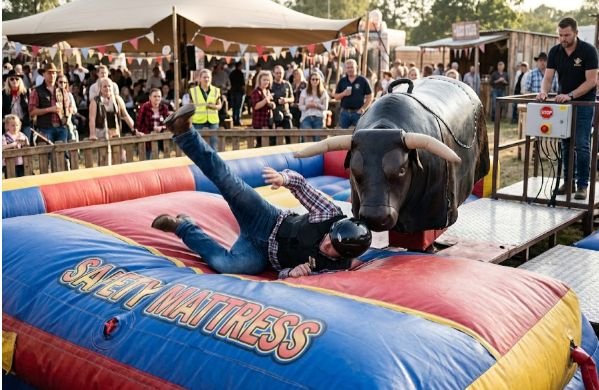
Around the base sits a large inflatable vinyl cushion. Instead of hitting a hard floor, riders land on an air-filled surface designed to absorb impact energy.
Combined with trained operators and proper supervision, these safety features make injuries relatively uncommon during properly managed events.
What Happens Inside the Machine During a Ride?
One interesting detail many riders never see is how both motors constantly communicate through the mechanical assembly.
While the spin motor rotates the platform, the buck motor independently changes the bull’s angle several times each second. Because these actions occur simultaneously, riders experience movements that feel surprisingly natural instead of mechanical.
After observing multiple commercial bulls in operation, I noticed skilled operators rarely rely on maximum speed. Small changes in timing often throw riders off balance faster than simply increasing intensity. That combination of rhythm and unpredictability makes experienced operators just as important as the machinery itself.
If you’re planning your first ride, wearing the right clothing makes a surprising difference. Choosing What to wear riding a mechanical bull can improve grip, comfort, and confidence before the ride even begins.
Common Myths About Mechanical Bulls
Many people assume mechanical bulls are dangerous simply because riders fall frequently.
In reality, professional systems are engineered to make falling expected and controlled. The ride stops almost immediately after a rider loses balance, and inflatable cushions absorb most of the impact.
Another common myth is that every ride follows the same pattern.
Modern control systems generate countless combinations of spins, tilts, and bucks. Even two consecutive riders rarely experience identical movement sequences.
Saddle Up With Confidence
Understanding how does a mechanical bull work makes the experience far less intimidating. Behind every thrilling ride is a carefully engineered machine using two independent motors, intelligent controls, trained operators, and multiple safety systems working together.
The next time you climb onto a mechanical bull, you’ll know every spin, buck, and sudden direction change is the result of precise engineering rather than random movement. Knowing how the system works can help you ride with greater confidence and enjoy every second.
Frequently Asked Questions
1. How does a mechanical bull work using two motors?
One motor controls spinning while the second controls bucking, pitching, and rolling to create realistic rodeo-style movement.
2. Can operators control the speed of a mechanical bull?
Yes. Operators adjust speed and difficulty instantly using a joystick or pre-programmed ride settings.
3. Are mechanical bulls safe for beginners?
Professional mechanical bulls include inflatable landing pads, automatic stop systems, and adjustable difficulty for safer beginner rides.
4. Why does a mechanical bull stop immediately when someone falls?
Most commercial machines use sensors or magnetic breakaway systems that activate a quick-stop brake as soon as the rider loses contact.