
Gathering thousands of eager fans for a live concert or local festival brings unmatched energy, but keeping everyone secure requires a clear blueprint. Learning how to write event safety plan frameworks turned our chaotic production schedule into a seamless, worry-free operation. You do not need a degree in crisis management to protect your crowd and venue staff effectively.
With a practical strategy in hand, you can easily anticipate potential hazards, organize your staff, and satisfy local municipal compliance standards. We are here to walk you through every single step with zero jargon. Let us transform complex security requirements into a straightforward playbook that keeps your next big gathering completely safe.
Essential Core Components for Your Event Blueprint
Laying a solid foundation begins with gathering essential venue details and assigning clear operational leadership.
Event Overview and Foundational Details
Every successful security strategy starts with a comprehensive event overview. You need to record basic administrative data, including the official event name, exact physical location, operating schedule, and primary organizer contact details. Recording these core facts gives external partners and emergency services immediate clarity on your venue layout and event scope.
Top institutions like Arizona State University highlight the importance of documenting site parameters early in their Event Safety Plan (ESP) Template. Defining whether your event takes place indoors or outdoors helps determine structural setup needs, generator placements, and environmental risk exposure. Keeping this basic overview accurate ensures all subsequent risk management steps align perfectly with your actual site footprint.
Roles and Responsibilities for Key Personnel
Organizing your staff around defined responsibilities is critical for maintaining order. Your documentation must list clear decision-makers, lead security managers, and medical coordinators along with their direct mobile phone numbers. When an unexpected incident occurs, team members must know exactly who holds the authority to pause performances or call for emergency support.
Following guidelines from the Event Safety and Planning Checklist, delegating specific oversight duties prevents duplicated efforts during fast-moving situations. Assign dedicated captains to monitor entry gates, vendor areas, and parking zones. Providing every team member with a clear operational hierarchy ensures that safety protocols are executed swiftly and without hesitation.
Comprehensive Risk Assessment and Hazard Scoring
Identifying site hazards in advance allows you to mitigate risks before attendees arrive.
A thorough risk assessment serves as the proactive engine of your safety document. You must evaluate every potential hazard, from unstable staging and exposed wiring to extreme weather exposure and medical emergencies. Scoring these hazards based on how likely they are to happen and how severe their impact would be helps prioritize your security budget.
Adhering to MIT EHS guidelines ensures your team addresses both common and high-severity operational threats. A high-probability, low-impact risk like a minor slip might require simple salt distribution, while a low-probability, high-impact risk like a structural failure demands immediate professional engineering oversight. Matrix scoring keeps your resource allocation balanced and effective.
Mastering Crowd Management and Site Access Protocols
Regulating crowd movement and monitoring entrance gates maintains venue stability throughout your event.
Perimeter Security and Entry Screening
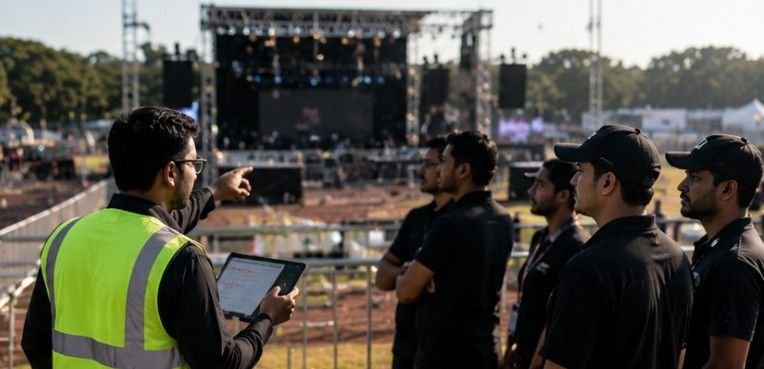
Establishing strong perimeter security is your first line of defense against potential safety breaches. Define clear physical boundaries using temporary fencing, barricades, and clearly marked entry points. Implementing organized bag checks and metal detection screening at main gates prevents hazardous items from entering your venue space.
Structured screening procedures also reassure attendees that their well-being is being actively protected. Staffing entrance lanes with trained personnel keeps lines moving efficiently while maintaining thorough checks. Clear signage outlining prohibited items prior to the screening area reduces gate friction and keeps security checkpoints operating smoothly.
Maximum Capacity Limits and Flow Control
Overcrowding poses severe risks to crowd safety and venue infrastructure. You must calculate precise venue capacity limits based on local fire codes and available square footage. Monitoring attendee counts at all entry and exit gates ensures your site never exceeds safe density thresholds during peak hours.
Designing wide pedestrian thoroughfares and using serpentine queuing systems keeps crowd flow steady around main stages and concessions. Placing staff at potential choke points allows you to redirect foot traffic before dangerous surges occur. Proper space planning guarantees that attendees move freely while keeping clear access lanes for medical teams.
Real-World Action Steps
Translating planning concepts into clear operational documentation requires a systematic step-by-step approach.
Drafting Actionable Step-by-Step Response Guides
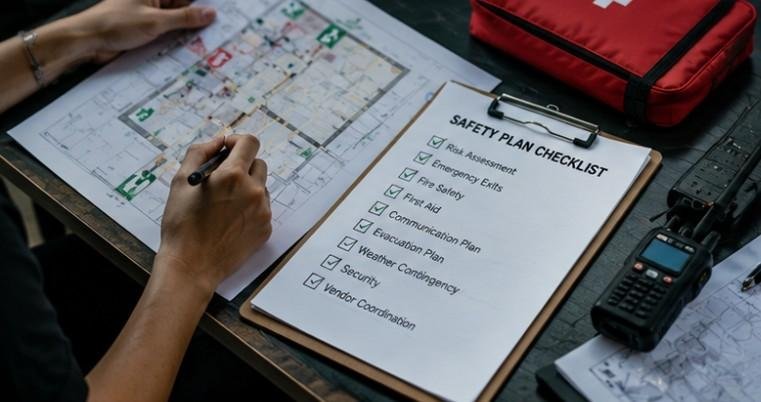
Writing an actionable safety plan starts with organizing your protocols into chronological sections. Begin by detailing pre-event setup checks, followed by active-event monitoring steps, and concluding with post-event breakdown procedures. Using clean, plain language ensures that any staff member or volunteer can understand their duties without needing technical training.
Resource guides such as the SIRV Security Plan Event Template emphasize using simple response templates for specific scenarios. Outline exact procedures for lost children, suspicious packages, power outages, and severe weather delays. Having standardized, step-by-step instructions pre-written eliminates panic and ensures consistent performance across your entire operational team.
Conducting Staff Briefings and Training Drills
A well-written document is only effective if your team understands how to execute it on the ground. Host mandatory pre-event briefings with all staff, security personnel, and key vendors to review emergency procedures. Running brief mock scenario drills helps identify communication gaps and clarifies individual responsibilities before gates open to the public.
Distributing concise reference cards to field staff gives them immediate access to emergency phone numbers and evacuation maps. Encouraging open feedback during training sessions helps refine operational steps based on real-world staff observations. Thorough preparation builds a confident team capable of handling any situation calmly.
Emergency Response and Medical Support Systems
Preparing comprehensive medical and evacuation procedures ensures attendee protection during critical health or weather events.
Medical Support and First-Aid Station Setup
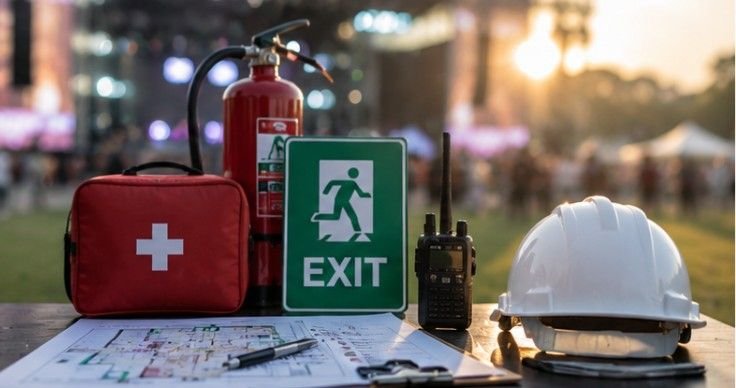
Establishing accessible medical support stations across your venue layout is essential for public safety. Clearly mark all first-aid tents with elevated signage so attendees can locate medical help instantly from anywhere on-site. Stock stations with essential supplies, automated external defibrillators, and fully certified medical professionals based on total management of crowd size.
Positioning medical posts near high-density areas allows for rapid response times when injuries occur. Contracting professional emergency medical services ensures seamless handoffs if an attendee requires transport to a local hospital. Maintaining detailed medical incident logs helps identify recurring venue hazards during the event.
Evacuation Routes and Assembly Point Mapping
An effective evacuation strategy requires clearly mapped exit routes that remain unobstructed throughout your entire event. Designate multiple primary and secondary assembly points located safely outside your venue perimeter. Ensure all emergency exits feature brightly illuminated signage and crash-bar hardware for quick manual operation.
Consulting resources like the National Weather Service Event Ready Guide helps you plan dedicated access corridors for incoming emergency vehicles. Keeping designated emergency lanes completely clear of vendor trucks and pedestrian crowds allows fire and rescue teams to reach critical zones instantly. Clear physical mapping saves vital minutes during time-sensitive evacuations.
Multi-Channel Communication Systems
Maintaining uninterrupted communication across your entire team is essential during fast-moving events. Utilize dedicated two-way radio channels, assigning separate frequencies for general operations, security personnel, and medical responders. Establishing a strict radio protocol prevents channel clutter and keeps emergency communication lines open at all times.
Incorporate public address systems and digital display screens to deliver clear instructions to attendees during unexpected disruptions. Pre-scripting announcement messages for weather delays or evacuations prevents panic and delivers authoritative guidance. Seamless communication ensures every part of your safety network moves as a unified team.
Frequently Asked Questions
1. How to write a safety plan?
Learning how to write event safety plan documentation involves identifying venue hazards, scoring potential risks, and assigning key roles. You must map exit routes, detail medical protocols, establish clear communication channels, and coordinate directly with local emergency services.
2. What are the five C’s of event planning?
The five C’s are Concept, Control, Coordination, Cultivation, and Closeout. The Control phase focuses on risk management, vendor compliance, crowd monitoring, and safety execution to keep your event safe and seamless.
3. How to write an event plan?
Write an event plan by outlining goals, schedules, budgets, and venue layouts. Include dedicated sections for staffing responsibilities, vendor management, promotional strategy, crowd flow, and a complete emergency safety protocol.
4. What are some ideas for safety events?
Great ideas include conducting interactive CPR workshops, hosting pre-event mock evacuation drills, offering fire extinguisher practice, and setting up guest safety awareness booths. Interactive training keeps staff prepared for unexpected emergencies.
Ready to Throw the Safest Party on the Planet?
Creating an outstanding safety strategy gives you the confidence to host unforgettable gatherings without stressing over unexpected crises. By assessing venue hazards, assigning clear staff roles, and mastering how to write event safety plan documents, you protect your crowd and reputation simultaneously. Put these proven steps into action today, empower your operational crew, and launch your next big event with complete peace of mind!
Leave a Reply